2026 Top Paper Bags Line Manufacturers for Global Buyers
Global buyers choosing a Paper Bags Line face a practical question: can the equipment deliver consistent bags at the required speed, size, and finish? Grand View Research estimated the global paper bags market at USD 5.46 billion in 2023 and projected a 4.4% compound annual growth rate through 2030. These figures suggest continued demand, but market forecasts are not purchase guarantees. Regional requirements, paper costs, and customer preferences can change the outcome.
Smithers’ report, The Future of Paper Packaging to 2028, examines trends shaping paper-based packaging, including material performance and production efficiency. For manufacturers, those trends make machine capability important. Buyers should assess forming accuracy, handle attachment, changeover time, energy use, and access to spare parts. A sample bag tells only part of the story. A factory trial can reveal wrinkles, glue failures, or unstable output across a full shift.
Details matter. A useful supplier comparison should include verified production data, technical documentation, installation support, and references from comparable plants. Ask how the line handles different paper weights, bag dimensions, and order volumes. Then check the answers against real samples and a clearly defined acceptance test. Some published market figures use different definitions, so comparisons deserve care. That is easy to overlook. This guide introduces leading manufacturers for global buyers, while recognizing that the best choice depends on the buyer’s products, operating conditions, and service needs—not a ranking alone.
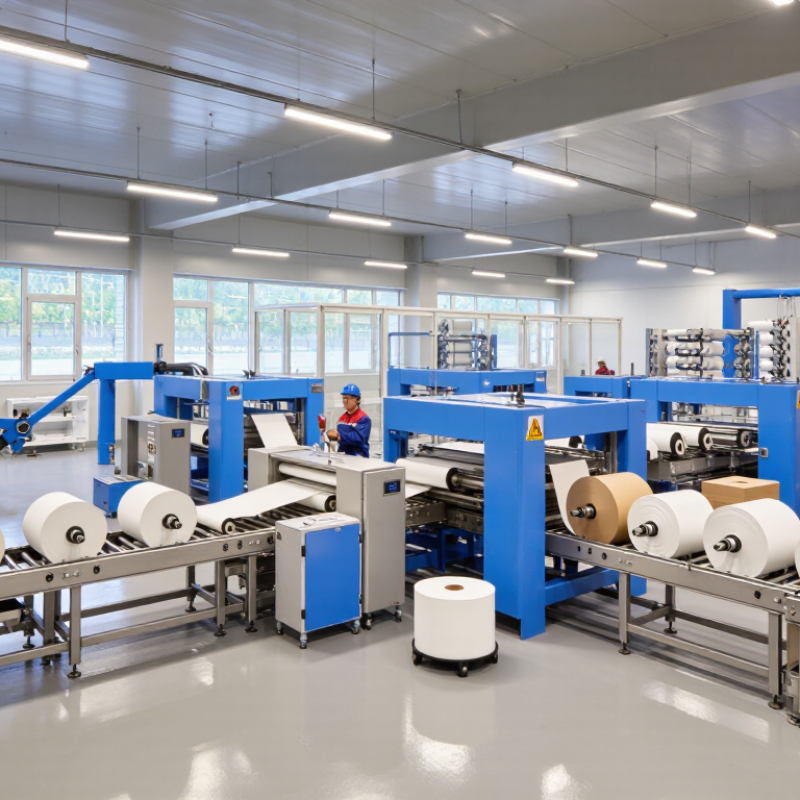
What Paper Bag Production Lines Are and How They Work
A paper bag production line converts rolls of paper into finished bags through a sequence of coordinated operations. The process usually begins with roll loading and tension control. Paper then moves through printing, if the design requires it, before being cut and formed into a tube. Not every line includes every station. The final layout depends on bag size, paper weight, handle style, and expected output.
At the forming section, rollers shape the paper tube and apply adhesive along its seam. A bottom-forming unit folds and glues the base, while separate equipment may attach twisted-paper or flat handles. Sensors and operators check alignment, glue application, and bag dimensions during production. Small details count. A slightly uneven fold can weaken the base, even when the bag looks acceptable from a distance. Settings also need adjustment when changing paper grades or formats.
For buyers, understanding the workflow helps clarify what a quoted line can actually produce. Ask which steps are automatic, what changeover time is typical, and how output is measured. A stated speed may not reflect steady production with printing, handle attachment, and routine stops included. That matters. Samples made from the intended paper can reveal stiffness, adhesive performance, and finish more reliably than a specification sheet alone. I would not treat the fastest number as the whole story; real production is less tidy.
How to Evaluate Paper Bag Line Manufacturers in 2026
Evaluating paper bag line manufacturers in 2026 means checking more than advertised speed. Start with your product: bag dimensions, handle style, paper weight, and daily output. Ask whether the proposed line can run your actual paper grade, not just a convenient sample. A short sample run can reveal slipping sheets, uneven folds, or glue marks. Small details matter.
Request production records for comparable machines, plus a clear factory acceptance test plan. Check changeover time between bag sizes and inspect finished bags for consistent seams and square bases. Ask how operators are trained, which spare parts are stocked, and how quickly technical support responds across time zones. A glossy brochure can still hide a weak changeover routine. I would treat unverified performance figures cautiously.
Tips: Send your own paper and bag specifications before comparing quotes. Ask to see a recorded or live test at the target speed, then review rejected bags. Confirm what installation, training, and warranty support include in writing. Leave room for uncertainty; one factory test may not reflect every production shift.
Leading Manufacturers and Their Production Line Capabilities
A capable paper bag production line connects several precise operations: roll unwinding, printing, tube forming, cutting, and bottom pasting. Handle-making and attachment may be built into the line or handled by separate equipment. This affects floor space, staffing, and finished-bag consistency. Ask manufacturers which paper weights and bag dimensions their equipment can actually process. A specification sheet is useful, but a trial run is more revealing.
Production speed depends on more than the machine’s rated output. Paper quality, bag size, print coverage, and changeover time all matter. Check how operators adjust tension and alignment when switching paper rolls. Inspect sample bags for square bottoms, clean folds, and secure handles. Still, no line is perfect. Even experienced teams can lose time during setup, and that detail is easy to underestimate.
Global buyers should compare measured output under agreed production conditions, not headline figures alone. Request details on inspection systems, common wear parts, operator training, and remote troubleshooting. Ask for records from a representative run, including reject rates and downtime causes, where available. Confirm the factory’s installation plan and spare-parts lead times before making a decision. A careful review can expose gaps early. One practical question remains: can the line maintain consistent quality across the buyer’s real product mix?
2026 Top Paper Bags Line Manufacturers for Global Buyers
Global paper and paperboard production by region — approximate share, 2022
Asia accounts for the largest share of global paper and paperboard output, followed by Europe and North America. This upstream supply context can help buyers assess sourcing regions; it does not represent individual paper-bag manufacturers’ converting-line capacities. Regional shares are rounded estimates based on FAOSTAT production data. Source: FAOSTAT Forestry Production and Trade.
How Automation, Materials, and Output Shape Manufacturer Choices
Choosing a paper bag line means looking beyond its advertised bags-per-minute figure. Automation matters most when it keeps feeding, tube forming, bottom folding, and handle placement steady across different sizes. Ask for output data using your paper weight, bag dimensions, and shift pattern. A fast line on one standard format may slow sharply during frequent changeovers. Watch a production trial. Check jams, rejected bags, and operator adjustments.
Material choice can expose weaknesses quickly. Recycled fiber, kraft grades, and coated papers behave differently under tension and folding. FAO reported global paper and paperboard production of about 401 million tonnes in 2022; that scale signals a broad resource base, not guaranteed supply of a specific bag grade. Eurostat reported that 83.2% of EU paper and cardboard packaging waste was recycled in 2022. This is useful context, but it is not a measure of bag-line performance. That distinction matters.
Compare manufacturers using usable output, not peak speed alone. Request run records for the exact material and bag style you plan to buy. Include changeover time, scrap rate, and uptime in the comparison. Sensors can catch misfeeds early. But sensors cannot fix poor setup. One detail is easy to overlook: a line may hit its target rate yet produce bags with weak seams or uneven bottoms. Ask to inspect samples after a sustained run, not just a brief demonstration.
How Global Buyers Can Compare Suppliers and Verify Compliance
For global buyers, comparing paper bag line manufacturers should begin with verified production data, not catalog claims. Ask for the same sample specifications: bag dimensions, paper weight, handle type, printing coverage, and hourly output. Then check handle-pull strength, seam integrity, and performance after humidity exposure. Small differences matter. A bag that looks sturdy on a dry showroom table may fail after transport.
Compliance needs evidence tied to the intended market and use. Request current material declarations, test reports, traceability records, and documented quality controls. For food-contact bags, confirm that inks, adhesives, and paper are suitable for the specific application.
OECD’s Global Plastics Outlook reported 353 million tonnes of plastic waste in 2019, with only 9% ultimately recycled. That figure supports pressure to assess packaging materials carefully, but switching to paper alone does not prove lower impact.
Ask suppliers for paper sourcing records and explainable environmental claims. Factory audits can compare actual line speed with quoted capacity. Observe changeovers, reject handling, and whether operators record defects by batch. Check that certificates match the factory address and product scope; paperwork can be outdated.
FSC or PEFC chain-of-custody documentation may help verify fiber sourcing, but buyers should confirm its validity independently. One awkward point: a supplier may pass an audit and still deliver inconsistent samples. Keep a retained reference sample, agree on measurable tolerances, and repeat checks before shipment.
