
Request A Quote

Phone: 416-244-6476
Email:

    2026 Top Sensor Street Light Types for Global Buyers

    Choosing the right Sensor Street Light in 2026 requires more than comparing prices and wattage. Global buyers must examine sensing range, battery performance, solar efficiency, control systems, and installation conditions. A coastal road may need corrosion-resistant housing, while a cold northern site demands reliable battery discharge protection. These details matter.

    This guide introduces the main sensor street light types for residential roads, parking areas, industrial parks, public paths, and remote locations. It considers microwave, PIR, radar, dual-sensor, solar-powered, and smart-networked designs. Each type offers practical advantages, but each also has limitations. PIR sensors may respond poorly through barriers. Microwave sensors can detect movement beyond the intended area. Smart systems may require stronger communication networks and better maintenance planning.

    Real projects rarely match product brochures perfectly. Weather changes. Traffic patterns shift. Installation heights vary. A light that performs well in a factory yard may struggle beside a busy highway. That assumption often fails. Buyers should request test data, review protection ratings, confirm regional electrical requirements, and assess long-term spare-part availability. They should also check whether connected features meet local privacy and communications rules.

    Experience shows that reliable lighting depends on system balance, not one impressive specification. Sensor sensitivity, dimming speed, beam distribution, and operating schedules must work together. A practical evaluation should include night testing, false-trigger monitoring, and battery recovery after cloudy days. Small flaws become expensive later. This overview helps global buyers compare suitable Sensor Street Light types with clearer expectations, stronger technical judgment, and fewer costly surprises.
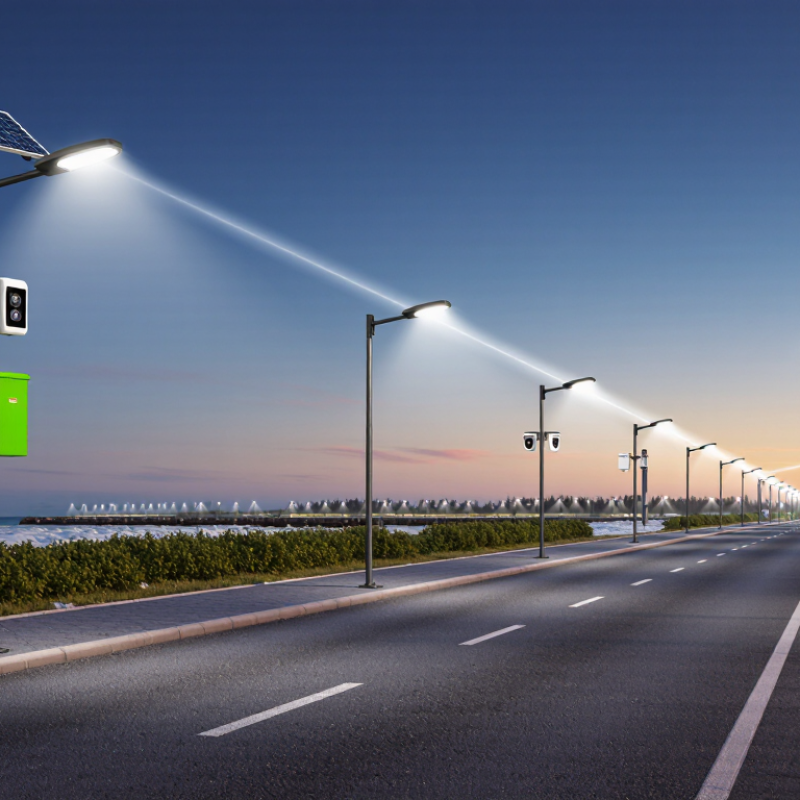
    2026 Top Sensor Street Light Types for Global Buyers

    What Are Sensor Street Lights and How Do They Work?

    2026 Top Sensor Street Light Types for Global Buyers

    What Are Sensor Street Lights and How Do They Work?

    Sensor street lights combine LED luminaires with devices that detect movement, daylight, or nearby activity. A passive infrared sensor notices body heat and motion. Microwave sensors detect movement through radio waves. Photocells measure daylight and switch lights on when streets become dark. Some systems combine these functions for better reliability.

    When traffic is absent, the controller dims the lamp, often to 20% or 30% output. A vehicle, cyclist, or pedestrian then triggers brighter illumination. The light returns to a lower level after a programmed delay. Simple photocells suit quiet roads. PIR sensors work well in parks and walkways. Microwave sensors can cover wider areas, but metal structures and heavy rain may affect performance.

    The International Energy Agency reports that lighting uses about 15% of global electricity. The World Bank has noted that street lighting can represent up to 40% of a municipality’s electricity use. These figures explain the interest in adaptive controls. However, savings depend on traffic patterns, dimming settings, maintenance, and installation quality.

    The sensor is not the whole solution. Poor aiming can create blind spots. Short delays may cause uncomfortable flashing. Long delays waste energy. Field commissioning often reveals these problems, and that part is easy to underestimate. Global buyers should request detection-range tests, ingress protection data, temperature limits, and documented energy measurements before selecting a sensor street light.

    2026 Top Sensor Street Light Types for Global Buyers

    Sensor street lights automatically adjust lighting based on detected movement, vehicles, or environmental conditions. The chart compares common sensor technologies by their typical outdoor detection range. Actual performance depends on installation height, weather, road layout, sensitivity settings, and ambient conditions.

    The Main Types of Sensor Street Lights Available in 2026

    In 2026, the main types of sensor street lights include PIR, microwave, radar, photocell, and hybrid systems. Each type responds to different outdoor conditions. PIR sensors detect heat changes from pedestrians, cyclists, and vehicles. They work well on quiet residential roads, but cold weather can reduce detection distance. Microwave and radar sensors measure movement through radio signals. They usually cover wider areas and detect vehicles more reliably. However, nearby metal structures may create unwanted triggers.

    Photocell street lights react to natural brightness. They switch on at dusk and off at dawn. This simple method suits roads requiring steady nighttime lighting. It does not detect movement, so energy savings may be limited. Hybrid lights combine photocells with motion sensors. A lamp can remain dim, then brighten when a person approaches. This often balances visibility and energy use. Still, poor sensor positioning can leave dark zones near trees, walls, or parked vehicles.

    Networked sensor lights add wireless control, fault alerts, and adjustable lighting schedules. They are useful for campuses, industrial roads, and large public areas. During site assessments, installers should test sensors at different heights and walking angles. A sensor that works at noon may perform differently in rain or fog. Field results matter more than a product sheet. No sensor is perfect. Some installations still need manual adjustments after several weeks. Clear records of false triggers, delayed lighting, and maintenance visits support safer purchasing decisions.

    How Lighting Sensors Differ by Detection Method and Function

    2026 Top Sensor Street Light Types for Global Buyers

    Street light sensors differ mainly by how they detect movement and what action they control. Passive infrared sensors respond to body heat and motion. They work well near walkways, entrances, and quiet residential roads. Their detection range can shrink in cold weather or behind walls. Simple, but limited.

    Microwave and radar sensors emit signals and measure returning movement. They can detect vehicles through light rain, dust, and some thin materials. Their wider coverage suits roads, parking areas, and industrial entrances. However, nearby moving branches or metal surfaces may create unwanted triggers. Careful angle adjustment matters. Ultrasonic sensors use sound waves and can detect slower movement, but wind and uneven outdoor surfaces may affect accuracy.

    Function matters as much as detection method. Photocells measure daylight and switch lamps on at dusk. Motion sensors support adaptive dimming, raising brightness when pedestrians or vehicles appear. Some systems combine radar with ambient-light sensing for better energy control. In field checks, installers should record pole height, road width, traffic speed, and nearby reflective objects. These details often matter more than a sensor’s advertised range.

    Camera-based sensors can classify pedestrians, bicycles, and vehicles with greater detail. They may require stronger privacy controls and careful maintenance. No sensor performs perfectly. A setting that works on an empty test road may fail during rain, fog, or festival traffic. Global buyers should request local trials, adjustable sensitivity, and clear replacement procedures before choosing a street light type.

    2026 Top Sensor Street Light Types for Global Buyers - How Lighting Sensors Differ by Detection Method and Function
    Sensor Street Light Type Detection Method Primary Function Typical Detection or Sensing Range Best-Fit Locations Key Advantages Main Limitations Typical Control Response Buyer Suitability
    Photocell / Ambient-Light Sensor Measures surrounding illuminance using a photodiode or light-dependent sensing element. Automatic dusk-to-dawn switching and daylight-based dimming. Ambient illumination rather than physical distance; common switching thresholds are approximately 10–50 lux, depending on configuration. Residential streets, parking areas, rural roads, and general dusk-to-dawn installations. Simple, low-power, cost-effective, and suitable for automatic daily scheduling. Cannot identify pedestrians or vehicles; direct sunlight, shadows, and nearby artificial light can affect readings. Turns the luminaire on at low light levels and off during daylight; may also initiate a programmed dimming schedule. High for basic automation
    Passive Infrared (PIR) Sensor Detects changes in infrared radiation caused by the movement of warm bodies, such as people or vehicles. Occupancy-triggered activation and adaptive brightness control. Typically about 5–12 m, with coverage influenced by lens angle, mounting height, and moving-object direction. Sidewalks, residential lanes, pedestrian paths, courtyards, and low-speed access roads. Low standby power, straightforward control logic, and good performance for moving pedestrians. Reduced sensitivity to stationary objects; can be affected by temperature, wind-blown vegetation, and detection blind spots. Raises light output when motion is detected, then returns to a lower standby level after a preset time. High for pedestrian areas
    Microwave Doppler Sensor Transmits microwave energy and detects frequency changes caused by moving objects. Motion detection for vehicle and pedestrian presence. Typically about 10–30 m; the actual range depends on antenna pattern, mounting angle, surroundings, and configured sensitivity. Roadways, parking lots, industrial sites, tunnels, and open areas requiring longer-range motion sensing. Works in darkness and can detect through some non-metallic materials; generally less dependent on visible light and temperature contrast than PIR. May detect movement outside the intended zone; metal structures, reflections, and nearby traffic can create false triggers. Switches from standby dimming to a higher output level when motion is detected. High for broad-area detection
    Millimeter-Wave Radar Sensor Uses high-frequency radar, commonly in the 24 GHz or 60 GHz range, to detect motion, distance, and sometimes direction. Presence detection, direction recognition, speed estimation, and multi-level adaptive lighting. Typically about 10–50 m, subject to antenna design, regulatory limits, mounting height, and target size. Arterial roads, intersections, smart-city corridors, parking facilities, and areas requiring precise detection zones. Strong operation in darkness, fog, and light rain; can provide more detailed movement information than basic motion sensors. Higher cost and configuration complexity; performance can be influenced by reflective surfaces and regulatory frequency requirements. Adjusts brightness according to approaching, passing, or departing traffic and can support zone-based lighting. High for intelligent lighting
    Ultrasonic Sensor Emits ultrasonic sound waves and measures the return time of reflected signals. Short-range presence and distance detection. Typically about 3–10 m, with performance affected by wind, temperature, humidity, surface shape, and mounting position. Covered walkways, enclosed parking areas, narrow lanes, underpasses, and controlled-access zones. Good short-range distance measurement and useful where optical visibility is limited. Less suitable for exposed roads; wind, rain, soft surfaces, and irregular objects can reduce detection reliability. Raises or lowers output based on detected occupancy within a defined short-range zone. Medium for sheltered areas
    Camera-Based Vision Sensor Uses image sensors and software algorithms to identify objects, movement, traffic flow, or occupancy. Object classification, pedestrian and vehicle counting, traffic analysis, and adaptive lighting. Typically about 20–100 m or more, depending on lens, resolution, mounting height, field of view, and lighting conditions. Intersections, major roads, transport hubs, public squares, and locations requiring traffic analytics. Can distinguish object types and support advanced traffic-management functions. Performance may decline in glare, heavy rain, fog, darkness, or obstructed views; requires privacy controls, data governance, and more computing capacity. Uses classified traffic or occupancy data to set lighting levels, timing, and sometimes multiple lighting zones. High for data-rich projects
    Dual-Technology PIR + Microwave Combines passive infrared movement detection with microwave motion sensing. More reliable occupancy detection with reduced false triggering compared with a single sensor in many installations. Typically about 5–20 m, depending on the individual sensor modules and the configured logic. Residential streets, campuses, parks, parking areas, and mixed pedestrian-vehicle zones. Combines low-power thermal detection with broader microwave coverage; sensor fusion can improve decision quality. Higher cost and commissioning effort than a single technology; incorrect alignment can reduce the benefit of dual sensing. Uses confirmation from one or both sensing methods before switching to full brightness or maintaining a higher output level. High for balanced performance
    Radar + Ambient-Light Combination Combines radar-based movement detection with a photocell or illuminance sensor. Provides both dusk-to-dawn scheduling and motion-responsive dimming. Ambient-light sensing plus approximately 10–30 m of radar motion coverage, depending on the radar design. Urban streets, logistics parks, rural highways, parking areas, and solar-powered lighting systems. Prevents daytime activation while maintaining adaptive lighting at night; supports energy-saving operating profiles. More components require careful calibration; radar reflections and incorrect light thresholds can affect operation. Enables the system only during darkness, then increases output when vehicles or pedestrians enter the detection zone. High for energy-saving projects
    Networked Sensor Node Combines local sensing, wireless communication, and remote software control; the local sensor may be PIR, radar, photocell, or a combination. Remote monitoring, fault reporting, scheduling, adaptive dimming, and group-level lighting management. Local detection range depends on the integrated sensor; wireless communication commonly covers approximately 100–1,000 m per link in open conditions, depending on network design. Smart-city networks, large campuses, highways, municipal streets, and distributed infrastructure projects. Enables centralized management, performance reporting, maintenance alerts, and coordinated lighting scenes. Requires compatible communication infrastructure, cybersecurity measures, commissioning, and ongoing system management. Combines local sensor events with schedules and remote commands to control brightness individually or by lighting group. High for connected infrastructure
    Note: Detection ranges, illuminance thresholds, and response behavior are typical engineering values rather than universal specifications. Actual performance depends on sensor design, mounting height, beam pattern, weather, road geometry, firmware settings, and local regulations.

    Key Performance Factors for Global Street Light Buyers

    For 2026, global buyers should compare sensor street light types by performance, not appearance. PIR sensors detect body heat and suit pedestrian paths, while microwave or radar sensors cover wider areas. Photocells respond to daylight and support reliable dusk-to-dawn operation. Hybrid systems combine these functions with scheduled dimming.

    No sensor is perfect. Heavy rain, parked vehicles, or moving branches may cause false triggers. Buyers should request detection-range tests under real site conditions.

    Tips: Check the sensor angle, response time, and adjustable sensitivity. Ask for photometric reports, IP and IK ratings, operating temperatures, and lumen-maintenance data. Confirm whether replacement sensors are locally available. Small details matter.

    Energy savings remain important, but light quality and safety come first. A fixture that dims too aggressively can create dark gaps between poles. Review spacing, mounting height, road width, and pedestrian activity together.

    For solar models, examine battery capacity, winter performance, and cloudy-day autonomy. Regional standards also differ, so verify electrical safety, electromagnetic compatibility, and glare limits before ordering.

    I once treated laboratory data as a complete answer; it was not. Field trials often reveal installation problems that specifications hide. A short pilot project can expose weak detection, delayed switching, or uncomfortable brightness changes before large-scale deployment.

    How to Select Sensor Street Lights for Different Road Environments

    2026 Top Sensor Street Light Types for Global Buyers

    How to Select Sensor Street Lights for Different Road Environments

    Start with the road. Highways need long-range radar or microwave sensors, because vehicles move quickly and pedestrian detection is less important. Adaptive dimming can reduce unnecessary output during quiet hours. The International Energy Agency’s Energy Efficiency 2023 report identifies lighting efficiency as a major electricity-saving opportunity, but savings depend on operating conditions. A narrow beam, accurate lux control, and reliable communication matter more than a high sensor count.

    Residential streets require different choices. Passive infrared sensors respond well to pedestrians and cyclists near sidewalks, while photocells maintain basic dusk-to-dawn control. For intersections, combine presence detection with scheduled dimming. The U.S. Department of Energy reports that networked lighting controls can deliver substantial energy reductions in suitable applications. However, walls, parked vehicles, rain, and tree movement can affect detection. Small detail. Sensor height matters.

    Industrial roads and loading areas often need radar, because dust, temperature changes, and protective clothing can reduce infrared performance. Coastal roads need sealed housings, corrosion-resistant materials, and drainage that prevents condensation. Check the IP rating, operating temperature, detection range, and failure response before purchasing. I would not trust laboratory range claims alone. Field tests should measure missed detections, false triggers, recovery time, and actual electricity use. The CIE’s guidance on outdoor lighting also supports site-specific assessment rather than one fixed lighting recipe. Some installations still over-dim lanes, which creates a safety concern and deserves honest review.