How to Choose a Distributed Power Generation Gearbox?
Choosing a Distributed Power Generation Gearbox is a practical engineering decision, not a catalogue exercise. The right unit must transfer power smoothly while handling changing loads, vibration, heat, and limited installation space. A gearbox that performs well in a factory test may behave differently beside a gas engine, wind turbine, or biogas generator.
Field experience shows that torque capacity is only part of the decision. Engineers should examine speed ratios, duty cycles, startup loads, lubrication methods, cooling requirements, shaft alignment, and expected operating hours. Noise and vibration also matter, especially when the equipment operates near offices, homes, or maintenance areas. Not just torque.
Reliable selection begins with accurate operating data. Record the prime mover’s rated power, transient conditions, ambient temperature, altitude, and maintenance history. Then compare the gearbox’s service factor, bearing design, sealing system, efficiency, and manufacturer support. Standards and test documentation can strengthen confidence, but they should not replace site-specific judgment.
A neat spreadsheet can still hide an unsuitable choice. For example, a gearbox may meet nominal torque requirements yet struggle with repeated starts or fluctuating renewable output. This is where consultation with qualified manufacturers, independent engineers, and experienced maintenance teams becomes valuable. The final choice should balance efficiency, durability, lifecycle cost, spare-parts access, and future expansion. Careful verification is slower at the beginning, but it often prevents expensive downtime later.
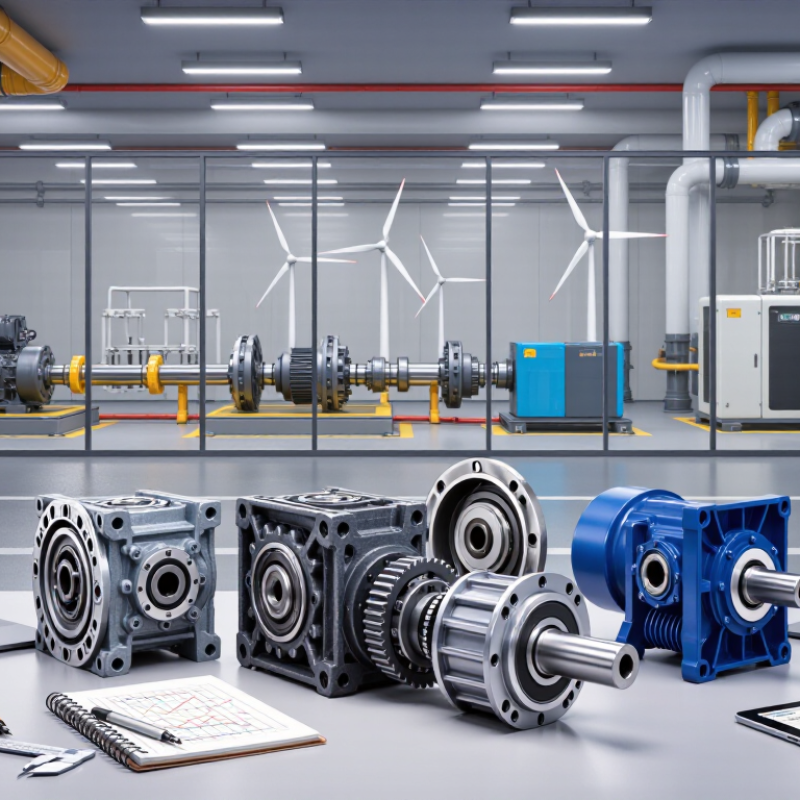
Define the Role of a Distributed Power Generation Gearbox
How to Choose a Distributed Power Generation Gearbox?
Define the Role of a Distributed Power Generation Gearbox
A distributed power generation gearbox transfers mechanical energy between the prime mover and the generator. Its main role is speed matching. Engines and turbines often rotate at different speeds, while generators require stable input conditions. The gearbox also manages torque, vibration, and changing electrical demand. In practical installations, it works near heat, dust, moisture, and frequent load changes. That environment makes housing protection and lubrication control important. Small details matter.
Choosing the right unit starts with operating data, not a catalog picture. Record input speed, output speed, rated power, peak torque, duty cycle, ambient temperature, and expected service life. Helical, planetary, and bevel arrangements each offer different benefits. A planetary design may reduce size, while another arrangement may simplify inspection. The compact option is not always the safest choice. Field checks should include shaft alignment, bearing temperature, oil condition, and unusual noise. That assumption fails. No selection is perfect, and load estimates can be wrong.
Tips: Leave a reasonable torque margin. Confirm the gearbox can handle short overloads and repeated starts. Check access for oil changes and vibration monitoring. Ask for documented test data, material specifications, efficiency figures, and maintenance requirements. If the operating profile is uncertain, measure it before final selection. It may cost more time, but it prevents expensive revisions.
Match Gearbox Specifications to the Power Generation System
How to Choose a Distributed Power Generation Gearbox?
Match Gearbox Specifications to the Power Generation System
A distributed power system needs a gearbox that fits its actual operating pattern. Start with generator speed, shaft torque, rated power, and required gear ratio. A unit producing 500 kW may face different loads than a similar unit operating at 1 MW. Nameplate power alone is not enough.
Check the prime mover’s behavior. Gas engines can create sudden torque pulses during load changes. Small wind turbines may experience frequent speed variation. Agricultural biomass systems often run for long hours near full load. The gearbox should handle these conditions without excessive vibration or tooth stress. I usually compare continuous torque with peak torque, then add a practical service factor. Too little allowance causes premature wear. Too much can increase cost and reduce efficiency.
Thermal performance also matters. Measure ambient temperature, oil temperature, cooling airflow, and installation height. A gearbox in a compact enclosure may need forced cooling, even when its calculated rating appears sufficient. Choose lubrication for the real climate, not an ideal workshop. Seals deserve attention too. Dust, moisture, and cleaning routines can quietly shorten service life.
Field inspections often reveal overlooked details. Misaligned shafts, soft foundations, and poorly supported couplings can damage a well-designed gearbox. This is where specifications become less certain. Designers should review measured vibration and operating records before final selection. A slightly conservative ratio may improve reliability, but it can also reduce output efficiency. That trade-off needs evidence, not assumption.
Verify Supplier Quality, Compliance, and Total Ownership Cost
A distributed power generation gearbox must survive changing loads, vibration, heat, and limited maintenance access. Supplier quality deserves more than a polished brochure. Request material certificates, production records, inspection plans, and test results for the exact gearbox configuration. Ask how teeth, bearings, seals, and housings are checked before shipment. A clear answer often reveals more than a low quotation.
Compliance should match the installation site, operating environment, and project contract. Review applicable safety, environmental, electrical, and machinery requirements with qualified engineers. Confirm that drawings, manuals, traceability records, and declarations remain available after delivery. During supplier audits, inspect calibration labels and sample inspection reports. Small gaps can become expensive delays.
Total ownership cost includes far more than the purchase price. Compare expected efficiency, oil changes, spare parts, service labor, downtime exposure, and transport requirements. Request realistic maintenance intervals under your planned load profile. Field experience matters here. I have seen an inexpensive gearbox consume its savings through frequent seal replacement and difficult alignment work. Another supplier may promise a long service life, but the evidence may be thin. That should trigger a deeper review, not immediate rejection. Use measured test data, warranty terms, response times, and local technical support to build a practical cost model. Leave room for uncertainty. Operating conditions rarely match the spreadsheet perfectly.
How to Choose a Distributed Power Generation Gearbox? - Verify Supplier Quality, Compliance, and Total Ownership Cost
| Evaluation Dimension | Recommended Requirement | Bidder A | Bidder B | Bidder C | Bidder D |
| Rated transmission power | Must meet or exceed the generator’s continuous operating rating | 500 kW | 500 kW | 450 kW | 500 kW |
| Nominal speed ratio | Selected according to prime-mover speed and generator speed | 15.0:1 | 15.0:1 | 14.5:1 | 15.0:1 |
| Continuous operating efficiency | Preferably ≥ 96% at the principal operating load | 96.8% | 97.2% | 95.9% | 96.5% |
| Service factor | Minimum 1.25 for variable-load distributed generation duty | 1.30 | 1.25 | 1.15 | 1.40 |
| Maximum allowable ambient temperature | At least 40°C without derating, unless the site design states otherwise | 45°C | 40°C | 40°C | 50°C |
| Housing protection | Minimum IP55 for outdoor or dusty power-generation installations | IP55 | IP54 | IP55 | IP66 |
| Quality management evidence | Current third-party quality certificate and documented production controls | Verified | Verified | Partial | Verified |
| Material traceability | Heat numbers, inspection records, and retained manufacturing documentation | Full | Full | Limited | Full |
| Factory acceptance testing | Documented test plan covering noise, vibration, leakage, temperature, and run-in checks | Included | Included | Optional | Included |
| Compliance documentation | Declaration of conformity, technical file, installation instructions, and safety documentation | Complete | Complete | Partial | Complete |
| Warranty period | At least 24 months from commissioning or 30 months from shipment | 24 months | 30 months | 12 months | 36 months |
| Expected overhaul interval | Based on load profile, lubrication quality, alignment, and operating environment | 40,000 h | 45,000 h | 30,000 h | 50,000 h |
| Quoted equipment price | Compare on equal scope, including couplings, base, sensors, documentation, and testing | USD 28,500 | USD 31,800 | USD 24,900 | USD 34,600 |
| Estimated delivery lead time | Confirmed production schedule with milestone dates | 18 weeks | 22 weeks | 14 weeks | 24 weeks |
| Estimated 10-year energy-loss cost | Calculated from efficiency, annual operating hours, load factor, and electricity value | USD 56,900 | USD 49,800 | USD 72,600 | USD 59,700 |
| Estimated 10-year maintenance cost | Includes oil, seals, bearings, inspections, labor, and one planned overhaul allowance | USD 31,500 | USD 27,800 | USD 42,900 | USD 24,600 |
| Estimated 10-year total ownership cost | Equipment price + installation allowance + energy-loss cost + maintenance cost | USD 131,900 | USD 132,400 | USD 145,400 | USD 134,900 |
| Overall procurement assessment | Prioritize verified quality, compliance completeness, operating efficiency, and lifecycle cost | Strong shortlist | Strong shortlist | Further verification required | Strong shortlist |
Costing basis: Illustrative procurement comparison for a 500 kW distributed-generation gearbox operating approximately 6,000 hours per year at a 75% average load. Installation allowance is assumed at USD 15,000. Actual total ownership cost should be recalculated using the project’s load profile, electricity value, environmental conditions, maintenance rates, taxes, freight, and downtime cost.
