Request A Quote

Phone: 416-244-6476
Email:

    How to Choose China Top Steel Pipe Manufacturers?

    Choosing a top Chinese steel pipe manufacturer requires more than comparing online quotations. Buyers must examine production capacity, material quality, certification, delivery records, and communication practices. A polished website proves very little. Factory evidence matters more.

    An experienced buyer should request mill test certificates, heat numbers, inspection reports, and sample photographs. These records connect the finished steel pipe with its raw material and production process. Confirm whether the manufacturer follows relevant standards, such as ASTM, API, EN, or other project requirements. Independent inspection can verify wall thickness, outer diameter, chemical composition, tensile strength, and surface condition. A reliable supplier should explain testing clearly, not hide behind technical language.

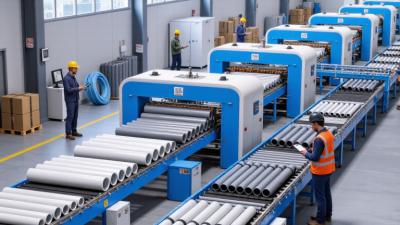
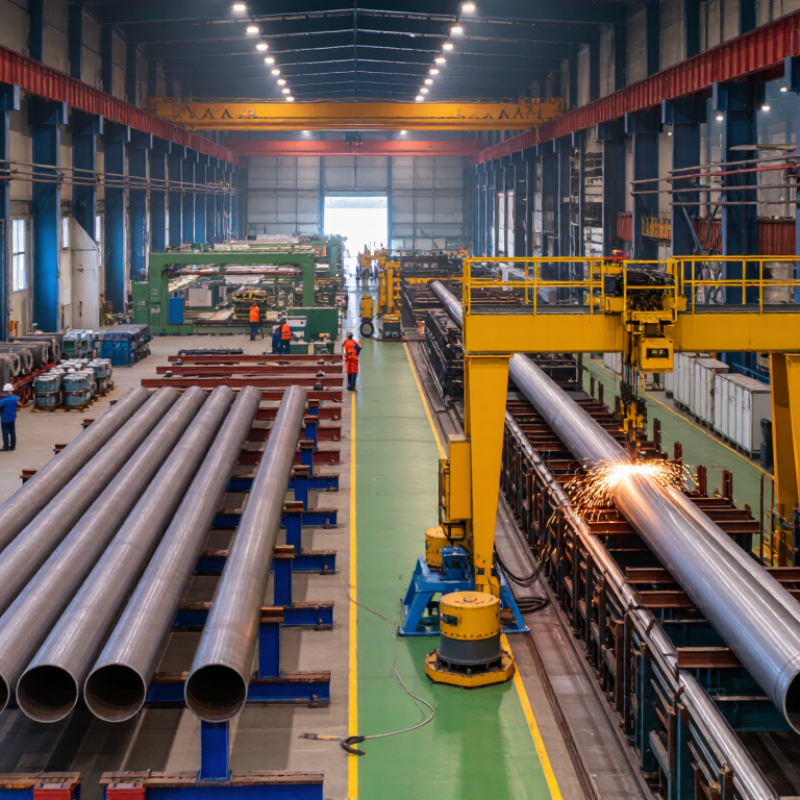
    Factory visits can reveal practical details. Look at welding lines, storage areas, coating equipment, and packing methods. Ask how damaged products are handled. Ask who controls quality before shipment. No supplier is perfect. Even a strong manufacturer may have delayed responses or inconsistent documentation. That weakness should be discussed openly, not ignored. In my experience, careful communication often predicts project performance. Compare several manufacturers using the same checklist. Review their export experience, production schedule, payment terms, and after-sales support. The best choice is not always the cheapest offer. It is the supplier that combines verifiable quality, realistic delivery promises, transparent documents, and steady technical support.
    How to Choose China Top Steel Pipe Manufacturers?

    Define Your Steel Pipe Requirements and Project Standards

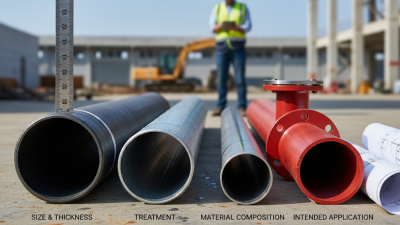
    Before comparing China’s top steel pipe manufacturers, define the pipe’s actual duty. Record the fluid, temperature, pressure, diameter, wall thickness, length, connection type, and installation environment. Soil chemistry matters for buried lines. Chlorides matter near coasts. Do not specify “carbon steel pipe” alone. That phrase is too broad.

    Match every requirement with a recognized project standard. For transmission lines, ISO 3183 or API 5L may control material grades, testing, and traceability. ASME B36.10M helps verify dimensions for welded and seamless steel pipe. ASTM specifications can define chemistry, tensile strength, impact performance, and inspection methods. World Steel Association’s World Steel in Figures 2024 reported about 1.89 billion tonnes of crude steel production in 2023. That scale shows why quality cannot be judged by production volume alone. A mill’s process records matter more.

    Ask manufacturers for heat numbers, mill test certificates, welding procedure qualifications, non-destructive testing records, coating data, and sample inspection plans. Confirm whether tolerances follow your contract standard, not a convenient substitute. On practical projects, buyers sometimes overlook end finishing and packing. Pipes may pass dimensional checks yet arrive with damaged bevels or wet internal surfaces. Small details become site delays. A perfect specification is rare. Review it with the designer, inspector, and installer. Leave no unclear acceptance criteria.

    Assess Manufacturer Qualifications, Certifications, and Production Capacity

    Choosing among China’s top steel pipe manufacturers requires more than comparing prices.

    Start by checking legal registration, export experience, and product qualifications. Ask for current ISO 9001 certificates and verify the certificate number with the issuing body. For specialized pipes, confirm compliance with applicable ASTM, EN, or GB standards.

    Paperwork is only the start.

    Request mill test certificates for recent production, not old sample files. These records should show heat numbers, chemical composition, tensile strength, wall thickness, and hydrostatic test results. A dependable manufacturer can explain each figure clearly. They should also provide traceability from raw billet to finished pipe.

    Inspect production capacity carefully.

    Confirm whether the factory operates ERW, seamless, galvanized, or coated pipe lines. Ask about the actual monthly output for your required diameter and wall range. Check heat treatment, ultrasonic testing, dimensional inspection, and packing procedures. A site audit or live video inspection can expose gaps between claimed and real capacity. Look closely.

    One practical lesson is uncomfortable: impressive certificates do not guarantee consistent delivery.

    Review recent order records, inspection reports, and corrective-action history. Ask how rejected pipes are handled. A serious supplier will discuss weaknesses without hiding behind polished documents. I would also request a small trial order before committing to a large contract, because production promises can change under pressure.

    Compare Steel Pipe Materials, Specifications, and Quality Control Systems

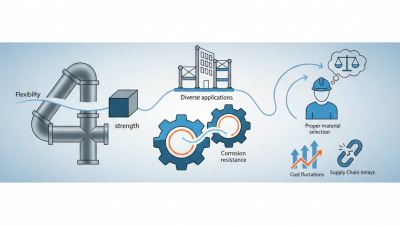
    Choosing a top steel pipe manufacturer requires more than comparing prices. Material selection should match the service environment. Carbon steel suits many structural and fluid applications. Stainless steel performs better where corrosion resistance and hygiene matter. Alloy steel is useful for high temperature or pressure conditions. Galvanized pipe can protect against atmospheric corrosion, but its coating requires careful inspection.

    Specifications must be written clearly before requesting quotations. Check outside diameter, wall thickness, length, pipe ends, tolerances, and pressure ratings. Also confirm the required standard and steel grade. A reliable manufacturer should provide heat numbers, chemical composition, mechanical test results, and traceability records. During project work, I have seen small differences in wall thickness affect installation and welding. Details matter.

    Quality control should cover the entire production route. Inspectors should verify raw materials, forming, welding, heat treatment, dimensions, and surface condition. Hydrostatic testing and non-destructive testing can reveal defects that visual checks miss. Ask whether testing equipment is calibrated and whether inspection records are retained. An independent inspection can add confidence for critical orders. Still, certificates are not proof by themselves. A polished document may hide weak sampling or poor traceability. Review the manufacturer’s procedures, audit the facility when possible, and compare records with delivered pipes. No system is perfect. A thoughtful buyer leaves room for verification.

    Evaluate Pricing, Lead Times, Customization, and Export Services

    Choosing a Chinese steel pipe manufacturer requires more than comparing a quoted unit price. Experienced buyers request a complete cost sheet covering steel grade, wall thickness, testing, packing, inland transport, and export documentation. A low price may exclude inspection or corrosion protection. Ask how prices change with raw material fluctuations. Request recent quotation validity. Keep a written comparison; memory is unreliable. Perhaps “cheapest” is not cheapest.

    Lead time should be measured from approved drawings and deposit receipt, not from the first inquiry. Ask for production capacity, mill test certificate timing, inspection windows, and port schedules. A serious supplier gives milestone dates and explains likely delays. I have found that optimistic promises create more damage than a slightly higher price. Still, buyers should verify performance against past orders, because one successful shipment proves little. Build a small buffer before installation.

    For customization, specify outside diameter, tolerance, length, end finish, coating, threading, and packaging with measurable requirements. Confirm whether changes affect tooling, minimum order quantity, or delivery time. Export service includes suitable marking, commercial invoices, packing lists, certificates, and cargo coordination. Check document samples before production. Clarify responsibility for third-party inspection and claims handling. English communication helps, but technical drawings prevent costly assumptions. One detail may remain uncertain: unusual specifications often expose limits that sales discussions overlook.

    How to Choose China Top Steel Pipe Manufacturers? - Evaluate Pricing, Lead Times, Customization, and Export Services

    Evaluation Dimension Profile A
    Large Integrated Mill
    Profile B
    Experienced Exporter
    Profile C
    Flexible Custom Producer
    Profile D
    Standard Product Specialist
    Profile E
    Small-Batch Supplier
    Typical product focus Carbon steel, galvanized and line pipe Welded and seamless pipe for overseas projects Special sizes, coatings and fabricated pipe Common construction and fluid pipe Small-volume standard and semi-custom orders
    Indicative FOB price range1 US$650–950/metric ton US$670–1,020/metric ton US$750–1,250/metric ton US$620–880/metric ton US$720–1,150/metric ton
    Standard production lead time 20–35 days 25–40 days 30–50 days 15–30 days 20–45 days
    Custom production lead time 35–55 days 40–60 days 45–75 days 30–50 days 35–65 days
    Typical minimum order quantity 50 metric tons 25 metric tons 10–25 metric tons 20 metric tons 5–10 metric tons
    Available outside diameter range 21.3–1,422 mm 21.3–1,220 mm 10–1,000 mm 21.3–630 mm 15–508 mm
    Wall thickness capability 2.5–80 mm 2.5–60 mm 1.5–50 mm 2.0–32 mm 1.5–25 mm
    Customization capability High: grades, sizes, ends and coatings High: project specifications and packaging Very high: drawings, fabrication and special finishes Medium: common sizes and end treatments Medium to high: low-volume modifications
    Common standards supported ASTM, API, EN, DIN, JIS and GB ASTM, API, EN, ISO and BS ASTM, EN, DIN, JIS and customer specifications ASTM, EN and GB ASTM, EN, JIS and GB
    Inspection and documentation EN 10204 3.1 certificate, dimensional and hydrostatic reports Mill test certificate, third-party inspection and photo records Material certificates, welding records and inspection plans Mill test certificate and routine dimensional inspection Mill test certificate; third-party inspection usually optional
    Export service coverage Strong: export packing, container planning and global documentation Very strong: multilingual support and destination-port coordination Good: project-based logistics and customized packing Standard: commercial invoice, packing list and bill of lading Basic to good: standard export documents and freight support
    Typical payment terms 30% deposit, 70% against shipping documents 30% deposit, 70% before shipment or by L/C 30% deposit, balance before shipment 30% deposit, 70% before shipment 30–50% deposit, balance before shipment
    Best suited for Large infrastructure and recurring volume orders Overseas projects requiring dependable export coordination Engineered orders and unusual specifications Cost-sensitive standard-product purchases Trial orders, replacements and smaller projects
    Overall evaluation score 4.6 / 5.0 4.5 / 5.0 4.3 / 5.0 4.1 / 5.0 3.9 / 5.0
    Notes: 1 Price ranges are indicative FOB China benchmarks for common carbon-steel pipe specifications. Actual quotations vary according to steel grade, diameter, wall thickness, coating, order quantity, inspection requirements, raw-material prices, exchange rates and shipment destination. Lead times begin after technical confirmation and deposit receipt.

    Verify Reputation Through Factory Audits, Samples, and Customer Feedback

    How to Choose China Top Steel Pipe Manufacturers?

    A factory audit reveals more than a polished website ever can. Check production lines, storage areas, testing rooms, and material traceability records. Ask how workers identify each steel coil from arrival to shipment. Verify quality certificates with the issuing organization. A missing record matters.

    Request samples from the same production line used for your order. Measure outside diameter, wall thickness, length, and surface condition. For critical applications, review chemical analysis, tensile results, and hydrostatic pressure tests. Compare the sample with the stated specification. Do not accept a perfect sample without batch evidence. That mistake can become expensive.

    Customer feedback should include recent buyers with similar pipe requirements. Ask about delivery accuracy, complaint handling, packaging damage, and repeat orders. Specific answers are more useful than vague praise. A manufacturer may pass an audit yet struggle with communication. During one review, a clean workshop distracted attention from delayed inspection reports. Small inconsistencies deserve questions, not excuses. Keep dated photographs, test documents, and written answers in one file. This creates a clearer basis for judging reliability, technical competence, and long-term cooperation.

    How to Choose China Top Steel Pipe Manufacturers?

    Verify reputation through factory audits, samples, and customer feedback.

    This weighted due-diligence model prioritizes factory audits and sample verification because they provide direct evidence of production capability, quality controls, traceability, and product conformity. Customer feedback adds independent evidence about delivery reliability, communication, and after-sales performance.