
Request A Quote

Phone: 416-244-6476
Email:

    How to Choose the Best Banner Stands for Your Business?

    Choosing the right Banner Stands can shape how customers notice, understand, and remember your business. A display may stand beside a busy entrance, under harsh exhibition lights, or in a narrow retail corner. Each setting demands a different solution. Size, portability, print quality, frame strength, and setup time all matter. So does the message.

    Marketing strategist Tom Fishburne offers a useful principle: “The best marketing doesn’t feel like marketing.” That idea applies strongly to Banner Stands. A successful stand should guide attention without blocking conversation or overwhelming the visitor. Clear branding helps. So does generous white space. Tiny text usually fails from several feet away.

    Start with the real working conditions. Will one employee carry the stand alone? Does it need to fit inside a compact vehicle? Will the banner be used weekly, or only once? Retractable models can save time during repeated events, while telescopic or modular systems may suit larger displays. Outdoor use requires greater attention to wind resistance, base stability, and weather-rated materials.

    Budget still matters. The cheapest option may become expensive after damaged graphics, weak hardware, or difficult replacements. That assumption is convenient, but often wrong. Ask suppliers about warranties, replacement parts, print consistency, and cleaning requirements. Request a photo of the assembled product, not only a polished design preview.

    This guide examines those practical details. It also questions a common mistake: choosing appearance before purpose. A beautiful Banner Stands display can still perform poorly. The best choice balances visibility, reliability, message clarity, and the daily reality of your team.
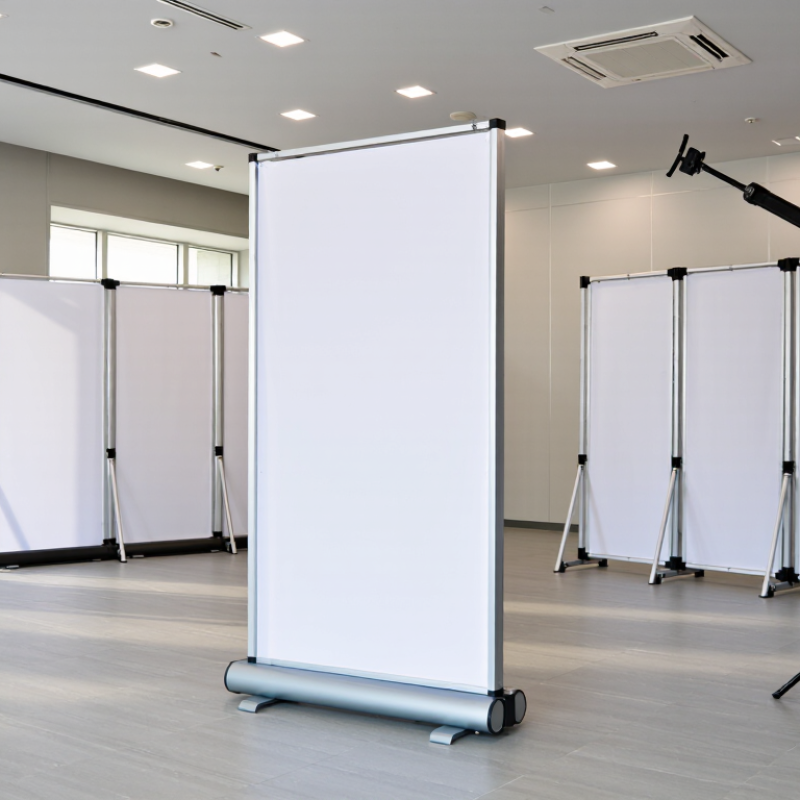
    How to Choose the Best Banner Stands for Your Business?

    Define Your Goal with CEIR’s 81% Trade-Show Attendee Buyer-Authority Data

    How to Choose the Best Banner Stands for Your Business?

    CEIR data indicates that 81% of trade-show attendees have buyer authority. That figure changes how you should choose banner stands. Your display is not only decoration. It must help decision-makers understand your offer within seconds. Start by defining your goal. Do you want qualified conversations, product demonstrations, or stronger brand recall? A compact retractable stand may suit quick aisle traffic. A wider backdrop may work better for scheduled meetings.

    Walk through the venue before ordering. Note the booth width, ceiling height, lighting, and nearby displays. A stand that looks impressive online may block a narrow walkway. Check its packed size if your team travels by air. A heavy base can improve stability, but it may slow setup. Request clear material specifications, printed dimensions, warranty terms, and replacement options. These details support a more reliable purchase.

    Keep the message readable from several meters away. Use one strong headline, a short proof point, and a visible next step. Avoid filling every panel with text. Attendees often glance while walking. They rarely stop for a paragraph. I would also question assumptions here. A premium-looking stand does not automatically create buyer interest. Test the design with someone unfamiliar with your business. If they cannot explain the offer in five seconds, revise the message before production. Consider modular hardware when campaigns may change. It can reduce waste, although repeated graphic updates may increase operating costs.

    How to Choose the Best Banner Stands for Your Business?

    Define your goal with trade-show attendee buyer-authority data.

    The referenced industry finding indicates that 81% of trade-show attendees have buying authority or influence, while 19% do not. For a buyer-focused event, prioritize banner stands with strong visibility, concise messaging, and easy portability.

    Match Stand Size to Space: 10-ft Booths and 33–35-in Roll-Up Widths

    How to Choose the Best Banner Stands for Your Business?

    A 10-foot booth needs a display that fills space without creating visual clutter. A 10-foot-wide backdrop usually works best when its graphic spans the rear wall. Leave clear walking space near the aisle. Attendees should enter easily, not squeeze around hardware. CEIR research reports that 81% of trade show visitors influence or authorize purchasing decisions. Strong visibility can therefore support serious conversations, not only decoration.

    For smaller areas, a 33–35-inch roll-up banner offers a practical footprint. It fits beside a registration table, product shelf, or meeting corner. Measure the floor before ordering. Allow extra width for the base, feet, and nearby traffic. The UFI Global Exhibition Barometer has reported continued growth in exhibition activity, increasing competition for attention. A narrow banner must communicate quickly. Use one clear headline, a readable offer, and generous contrast. Details vanish from a few steps away.

    Test the stand in real conditions. Place it under venue lighting. View it from ten feet. Some designs look sharp on a monitor but become crowded in print. That mistake is common. I would also question whether a full 10-foot backdrop is necessary for every event. Smaller rooms may reward a 35-inch roll-up, while open exhibit halls need broader visual reach. Recheck the measurements, because a single overlooked inch can affect setup and aisle comfort.

    Compare Retractable, Fabric, and Modular Stands by Weight and Reuse

    How to Choose the Best Banner Stands for Your Business?

    Weight changes the real cost of a display. A retractable stand usually weighs about 3–8 kilograms and packs into one carry case. It opens quickly, making it practical for sales visits and small exhibitions. Fabric stands often weigh 5–12 kilograms, depending on the frame and lighting. Their printed graphics fold into a compact bag, but wrinkles may appear after careless packing. Modular stands are heavier, often 15–40 kilograms, because they use multiple frames, shelves, or counters. They need more transport space.

    Reuse matters more than a low purchase price. The Promotional Products Association International reported that 82% of consumers consider product quality important for keeping promotional items. That principle also applies to display hardware. A durable retractable cassette can support repeated campaigns, while replacement graphics extend its useful life. Fabric systems offer strong visual continuity; new silicone-edged graphics can refresh the same frame. Modular systems provide the greatest layout flexibility, but their extra parts create more opportunities for damage or loss.

    Check the numbers. According to UFI’s 2024 Global Exhibition Barometer, cost pressure remains a major concern for exhibition businesses. A lighter stand can reduce courier charges and staff effort. However, I have seen teams choose the lightest option and replace it too soon. That is a false saving. Measure your travel frequency, storage space, setup time, and expected graphic changes before choosing. Your “best” stand may be the one staff will actually reuse.

    Prepare Print Files at 200–300 DPI with a 3–5-Second Message Hierarchy

    How to Choose the Best Banner Stands for Your Business?

    A banner stand succeeds before anyone reads every word. Prepare print files at 200–300 DPI, based on the final output size and viewing distance. At a close trade-show distance, 300 DPI usually protects small text and product edges. For larger graphics viewed several steps away, 200 DPI may remain visually clean. Ask your printer to confirm the effective resolution. I have seen attractive designs soften because the source image was too small.

    Build a three-to-five-second message hierarchy. The first glance should reveal the offer or business category. The second should explain the benefit. The final glance should show one action, such as “Scan for pricing.” Keep the headline large, with strong contrast and generous spacing. Shorter is safer.

    Nielsen Norman Group’s eye-tracking research shows that people scan visual content rather than read every word. A banner must respect that behavior.

    Industry evidence supports careful production. The 2023 FESPA Print Census reported that 56% of print businesses expected turnover growth, increasing pressure for consistent, professional output. ISO 12647-2 also provides process-control guidance for predictable color reproduction, though screen colors can still mislead. Export a press-ready PDF, embed fonts, and check bleed requirements. Do not trust a laptop preview alone. A small proof print can reveal weak contrast, crowded spacing, or a headline that fails at three seconds. My own preference sometimes makes layouts too minimal; testing with unfamiliar viewers remains necessary.

    Verify Fire Ratings, Warranty Length, and Cost per Event Before Buying

    A banner stand can look sturdy under showroom lights, yet its fabric may fail a flame test. Ask for the complete assembly’s fire-rating report, not a vague “fire resistant” claim. NFPA’s Fire Loss in the United States report recorded about 1.39 million fires in 2023. Displays are rarely the main cause, but crowded venues leave little room for careless materials. Check whether the fabric meets NFPA 701, ASTM E84, or the venue’s stated standard. Requirements vary by location.

    Request the test date, laboratory name, material composition, and treatment limitations. Ink, liners, and replacement graphics can change performance. That detail matters. I have seen buyers trust a certificate without checking whether it covered the printed fabric. That was a costly assumption. Ask the venue or authority having jurisdiction before ordering, because a supplier’s test may not satisfy local rules.

    Warranty length should match your event schedule and transport conditions. A two-year warranty sounds useful, but it may exclude creases, outdoor exposure, hardware damage, or frequent assembly. Record the number of planned events, replacement parts, freight, storage, and setup labor. Then divide total ownership cost by expected uses. The Freeman 2024 Experience Economy Report found that 91% of surveyed executives viewed live experiences as valuable business investments, but value still depends on repeat use. A cheaper stand may become expensive after three events. A premium option may also disappoint if its warranty service is slow. Ask for response times in writing.