Why Choose the Right End Mill for Your Machining Needs?
Choosing the right End Mill is crucial for achieving precision in machining tasks. An End Mill is a type of cutting tool used in CNC machining. It plays a vital role in the manufacturing industry. Selecting the appropriate End Mill can significantly impact the quality of the final product.
Mismatched tools can lead to poor finishes or even tool breakage. This makes understanding the various types of End Mills essential. You need to consider factors like material, size, and flute design. Each element influences the machining process. The right choice can enhance tool efficiency and durability. However, not all tool selections are straightforward. Sometimes, trial and error may be necessary to find the perfect fit.
Expert opinions often highlight the importance of quality in End Mills. Investing in high-quality tools can yield better results. Reliable suppliers can provide valuable guidance in your selection process. Ultimately, the right End Mill is about balancing performance and cost. Engaging knowledgeable professionals can also provide insights that improve your decision-making.
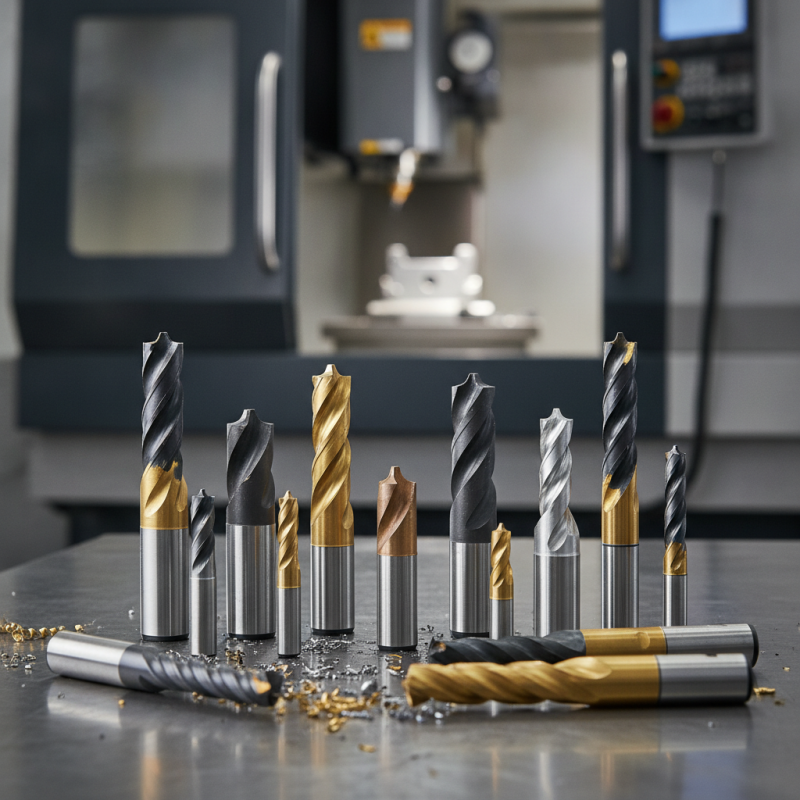
Understanding End Mills: Types and Their Applications
End mills are essential in machining. They come in various types, each suited for specific applications. Knowing these types helps optimize your machining processes. For instance, a study by Market Research Future indicates that about 30% of machining tool errors are related to incorrect end mill selection.
Solid carbide end mills are popular for their durability and excellent precision. They can withstand high temperatures, making them ideal for tough materials like stainless steel. However, their brittleness can lead to breakage if not handled properly.
In contrast, high-speed steel (HSS) end mills are more flexible but less durable. Users often face dilemmas choosing between efficiency and material compatibility.
Understanding coatings also plays a crucial role. Coated end mills can improve performance and lifespan significantly. According to the Association for Manufacturing Technology, utilizing coated tools increases operational efficiency by nearly 25%. Yet, not every coating is suitable for every material. This mismatch can lead to reduced productivity and wasted resources. Choosing the right end mill requires careful thought and a clear understanding of your machining needs.
Key Factors to Consider When Selecting an End Mill
Choosing the right end mill is crucial for effective machining. Several key factors significantly influence the decision. Material type is one of the first aspects to evaluate. Different materials require specific tools to achieve optimal results. For instance, stainless steel may demand a different end mill than aluminum.
Tool geometry is also vital. Flute count and shape directly impact chip removal and surface finish. A higher flute count can produce smoother finishes but may hinder chip removal in certain applications. This balance is not always clear-cut; mistakes can lead to poor results.
Lastly, consider coatings. Coated end mills can enhance wear resistance and reduce friction. However, choosing the wrong coating may compromise performance. Understanding these elements requires experience and knowledge. Every machinist must reflect on previous choices to refine their tool selection process for future projects.
Why Choose the Right End Mill for Your Machining Needs?
This chart illustrates the key factors to consider when selecting an end mill for machining needs and rates their importance on a scale from 1 to 10. Material is deemed most crucial, followed by diameter and flute count.
The Role of Material Compatibility in End Mill Selection
Choosing the right end mill is essential for effective machining. Material compatibility significantly influences the performance of an end mill. For example, using high-speed steel (HSS) end mills for tough materials can lead to rapid wear. According to a report from the Manufacturing Institute, about 30% of machining failures come from incorrect tool selection.
When selecting an end mill, consider the material being machined. Carbide end mills work best with harder materials like stainless steel. They provide increased durability and heat resistance. A recent study by the American Society of Mechanical Engineers (ASME) indicated that using appropriate materials can yield a 15% increase in productivity.
Let's reflect on the common mismatches. Some machinists still rely on generic tools for various materials. This approach can lead to suboptimal results. Inadequate tool life and unnecessary downtime can be a consequence. Ensuring compatibility not only extends the lifespan of tools but also optimizes machining processes. Small adjustments in tool selection can lead to significant improvements in overall efficiency.
How Cutting Geometry Affects Machining Performance
Choosing the right end mill is vital for machining success. The cutting geometry plays a significant role in overall performance. Different geometries affect chip removal, surface finish, and tool life. This means selecting the correct design can enhance efficiency and reduce costs.
Flute design is crucial. For example, a higher flute count may improve surface finish, but can also slow down chip removal. Alternatively, fewer flutes allow for quicker chip evacuation, but may compromise surface quality. This balance requires careful consideration based on the material and operation at hand.
Cutting angles also matter. A sharper angle can effectively slice through materials, offering faster machining. Yet, this may lead to quicker wear. In contrast, a more blunt angle offers durability but may cut slowly. Analyzing these factors is essential. Not every scenario is simple, and sometimes trial and error is necessary. Each machining environment is unique, requiring constant re-evaluation of choices made in tool selection.
Cost vs. Quality: Making the Right Investment in End Mills
Choosing the right end mill is critical in machining projects. Cost and quality often collide, creating tough decisions. Some may opt for budget-friendly options, but sacrificing quality can lead to problems. A low-cost end mill might wear out quickly. This could result in more frequent replacements and possibly damage to the workpiece.
Investing in higher-quality end mills can improve efficiency. They tend to provide a better finish, which can reduce the need for additional machining. A well-crafted end mill cuts accurately and lasts longer, making it a smart investment. Yet, one should consider the specific application. Not every project requires the premium option. Sometimes, a basic tool suffices for less demanding tasks.
Reflecting on choices helps shape future decisions. New machinists may feel tempted to buy the cheapest option. However, as they gain experience, they often recognize the value of quality. Learning from mistakes is part of the journey. The balance between cost and quality requires thoughtful consideration in every decision.
Why Choose the Right End Mill for Your Machining Needs? - Cost vs. Quality: Making the Right Investment in End Mills
| End Mill Type | Material | Diameter (mm) | Price ($) | Tool Life (hours) | Usage Application |
| High Speed Steel (HSS) | HSS | 10 | 25 | 20 | General Machining |
| Carbide | Carbide | 12 | 45 | 40 | Precision Machining |
| Cobalt | Cobalt Steel | 8 | 35 | 30 | Hard Materials |
| Diamond Coated | Diamond | 6 | 120 | 80 | Composite Materials |
| End Mills with Tialn Coating | HSS with TiAlN | 9 | 40 | 50 | Aluminum and Non-Ferrous Materials |
