
Top 10 Unique Candle Jars for Wholesale Buyers
For wholesale buyers, a candle jar is more than a vessel. It affects shelf appeal, shipping efficiency, filling workflow, and the customer’s first impression. The right shape can make a simple scent feel considered. The wrong one can complicate packing or look less appealing in product photos. Small details matter: a thick glass base, a snug-fitting lid, or a textured finish catching the light.
Industrial designer Dieter Rams offered a useful design principle: “Good design is as little design as possible.” Applied to candle jars, that idea favors clear purpose over decoration alone. A distinctive silhouette should still be stable, easy to handle, and practical for repeat orders. Unique Candle Jars can stand out through colored glass, ceramic forms, unusual profiles, or thoughtful surface details. Yet visual impact is only part of the decision. Buyers should also compare capacity, material consistency, finish quality, and how securely jars arrive.
This guide explores ten distinctive styles and the trade-offs behind them. Some suit boutique collections; others may work better for larger runs. Not every jar wins. A dramatic shape might photograph beautifully but use more shelf space, and that deserves a second look. The aim is to help buyers ask better questions, request samples, and choose vessels that fit both their brand and their operations. A careful choice feels special—and works on an ordinary packing day, too.
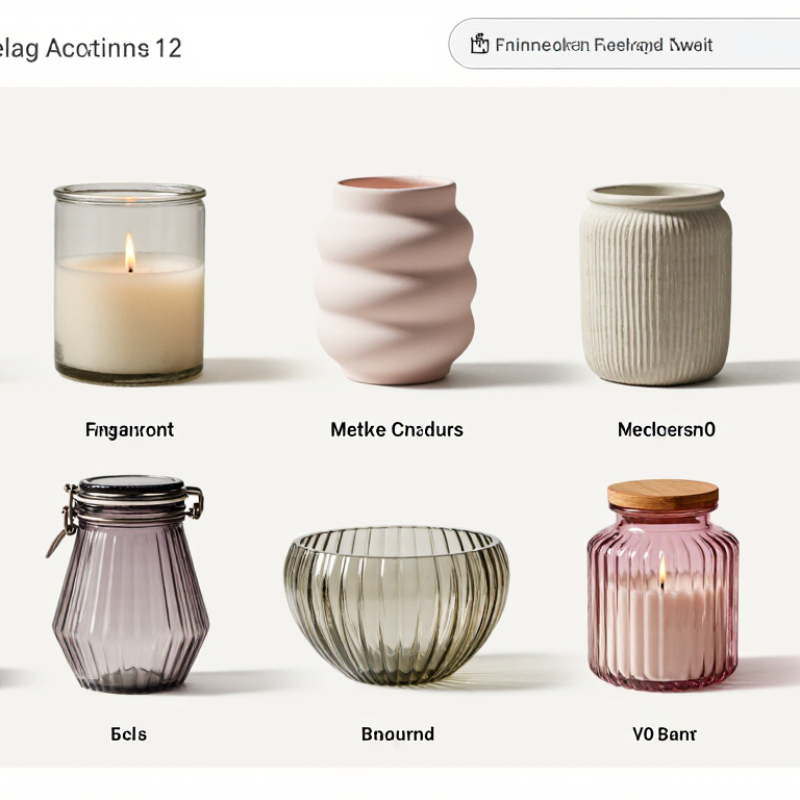
Top 10 Unique Candle Jar Types: Materials, Shapes, and Finishes
Top 10 Unique Candle Jars for Wholesale Buyers
Top 10 Unique Candle Jar Types: Materials, Shapes, and Finishes
A distinctive jar can help a candle stand out, but wholesale buyers should weigh appearance against packing and filling needs. Consider amber glass for a warm, muted look, clear glass for visible wax, colored glass for a stronger shelf presence, and recycled glass for subtle variations. Ceramic jars offer a solid, tactile feel, while concrete vessels bring a matte, mineral texture. Metal tins are light and stack efficiently. Practical details matter. Check each vessel’s heat suitability and dimensions before ordering.
Shapes and finishes add more options. Apothecary jars have familiar, rounded profiles; square jars make cartons easier to arrange. Ribbed glass catches light and adds grip, while oval vessels create a softer silhouette. Smooth, frosted, glossy, and hand-textured finishes each change how color and labels appear. Some look striking. Others may be harder to clean or label consistently. Ask suppliers for samples, then compare wall thickness, rim quality, and finish consistency across several units. Unusual does not always mean better.
Tips: Test samples with the intended wax and wick, and inspect the vessel after a full burn. Confirm case-pack quantities and protective packaging, since fragile shapes can raise shipping costs. Record measurements and finish tolerances before approving a bulk run; small differences can disrupt lids or labels.
Top 10 Unique Candle Jars for Wholesale Buyers — Materials, Shapes, and Finishes
| No. | Jar Type | Common Material | Typical Shape | Popular Finish | Common Capacity Range* | Wholesale Strengths | Sourcing Considerations |
|---|---|---|---|---|---|---|---|
| 1 | Apothecary Glass Jar | Glass | Cylindrical or gently tapered, often with a wide opening | Clear, amber, or lightly tinted | 180–500 ml | Familiar format, easy to label, and suitable for a broad range of candle styles. | Check glass thickness, lid fit, and vessel performance with the intended wax and wick. |
| 2 | Frosted Glass Jar | Glass with a frosted surface treatment | Straight-sided cylinder | Matte or satin frost in clear, white, or tinted glass | 180–400 ml | Softens the appearance of the candle and offers a refined look without a complex shape. | Confirm coating durability and whether the finish is applied to the inside or outside. |
| 3 | Colored Glass Jar | Mass-colored or surface-colored glass | Round, straight-sided, or slightly tapered | Opaque, translucent, or glossy color | 150–450 ml | Provides color differentiation while retaining the familiar feel of a glass vessel. | Request color samples and check batch-to-batch consistency, especially for custom shades. |
| 4 | Faceted Glass Jar | Glass | Geometric sides, such as cut-look hexagonal or multi-faceted forms | Clear, tinted, or lightly textured | 180–350 ml | Distinctive surfaces can make a simple candle stand out on shelves and gift displays. | Inspect the base for stability and verify that labels or printed decoration fit the available surface. |
| 5 | Wide-Mouth Tumbler | Glass | Short, broad cylinder | Clear, colored, or textured | 250–700 ml | A generous opening supports easy filling and allows the candle surface to be clearly visible. | Confirm the opening diameter, fill weight, and compatibility with the chosen wick configuration. |
| 6 | Ceramic Candle Jar | Glazed ceramic | Round, square, or softly tapered | Gloss glaze, matte glaze, or reactive-style glaze | 180–500 ml | Offers substantial color and surface options, and the vessel may be reusable after use. | Check wall and base consistency, glaze quality, dimensional variation, and candle-use testing. |
| 7 | Concrete-Style Vessel | Concrete or cement-based composite | Geometric cylinder, cube, or tapered form | Raw, sealed, pigmented, or lightly polished | 150–400 ml | Its solid, mineral-like appearance suits contemporary and rustic product assortments. | Ask about sealing, surface porosity, weight, and protection against chips during transit. |
| 8 | Metal Candle Tin | Tinplate or aluminum | Round, shallow, or travel-size cylinder | Brushed, painted, printed, or plain metal | 60–250 ml | Lightweight and compact, making it practical for travel formats, gift sets, and shipping. | Check lid fit, interior coating suitability, sharp-edge control, and heat performance in testing. |
| 9 | Double-Wall Glass Jar | Glass | Rounded or cylindrical insulated form | Clear, frosted, or tinted outer wall | 150–350 ml | The double-wall construction creates a distinctive visual effect and an insulating air gap. | Inspect for bubbles or defects between walls and verify dimensions, stability, and candle performance. |
| 10 | Wooden-Lid Glass Jar | Glass vessel with a wood lid | Straight-sided cylinder or rounded jar | Clear, amber, or tinted glass; natural or stained lid | 180–450 ml | Combines a versatile glass vessel with a contrasting natural-looking lid. | Check lid fit, wood finish, moisture sensitivity, and whether the lid is intended only for storage. |
*Capacity ranges are approximate examples for common retail candle-vessel formats. Actual dimensions and usable fill volumes vary by supplier and design. Candle vessels should be tested with the selected wax, wick, fragrance load, and burn conditions before production.