Why Choose an LNG Exchanger for Global Buyers?
Why Choose an LNG Exchanger for Global Buyers? The answer begins with changing trade patterns, stricter efficiency targets, and demanding cryogenic operations. The International Energy Agency’s Gas 2024 report expected global LNG supply to expand by about 2.5% in 2024. GIIGNL’s Annual Report 2024 recorded more than 404 million tonnes of global LNG trade in 2023. More cargoes mean more liquefaction plants, terminals, regasification units, and heat-transfer duties.
The equipment matters.
An Lng Exchanger transfers heat safely while LNG moves near -162°C. Its design affects vaporization speed, pressure stability, fuel consumption, and maintenance frequency. Buyers should examine aluminum alloy selection, thermal stress, flow distribution, pressure drop, and resistance to freezing. A low purchase price may become an expensive lesson when fouling or uneven cooling causes downtime. That assumption needs testing.
Fatih Birol, Executive Director of the International Energy Agency, once said, “The golden age of gas is upon us.” His statement, made in the IEA’s 2011 World Energy Outlook context, still reflects LNG’s expanding infrastructure needs, although today’s energy transition makes the picture less simple. Buyers must compare lifecycle emissions, refrigerant requirements, service access, and local operating conditions. No exchanger fits every project.
A reliable supplier should provide verified performance data, factory testing records, material certificates, and references from comparable facilities. Field experience also matters. A unit that performs well in a temperate port may struggle in humid tropical air or dusty inland conditions. The right Lng Exchanger is not merely a component. It is a long-term operating decision.
What Is an LNG Exchanger and How Does It Work?
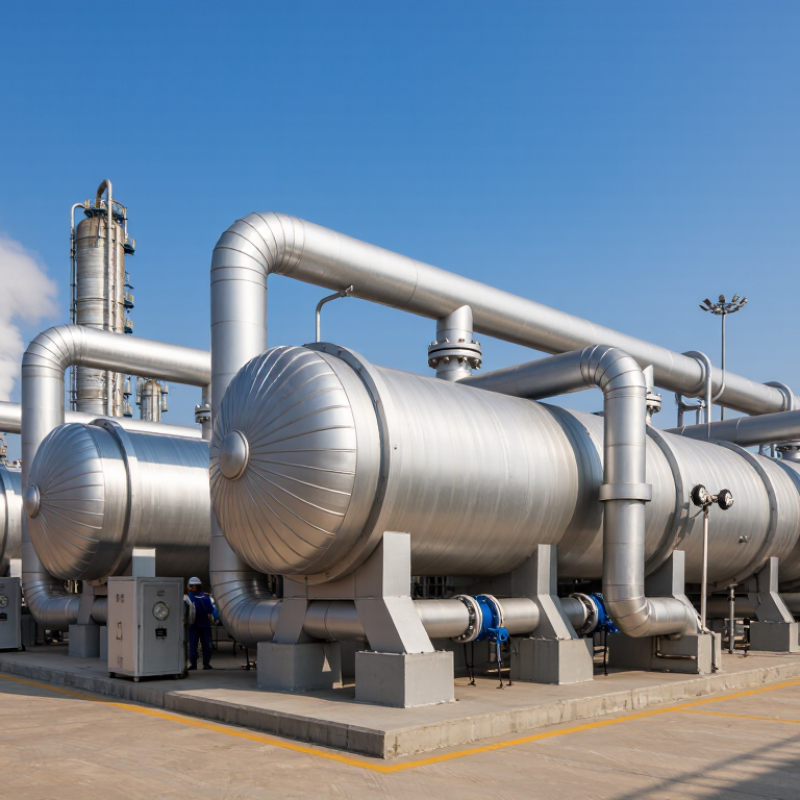
An LNG exchanger is a cryogenic heat-transfer device used to cool natural gas during liquefaction or warm LNG during regasification.
It transfers heat through metal surfaces, while LNG and the heating medium remain separated. In a receiving terminal, LNG enters near -162°C. Seawater, ambient air, or a closed-loop fluid supplies controlled heat. The LNG becomes gas, expands, and moves into the transmission network. The process sounds simple. It is not.
Design depends on flow rate, pressure, temperature change, and local water conditions. Plate-fin, shell-and-tube, and printed-circuit exchangers serve different duties.
Global buyers should check thermal performance, materials, inspection records, and maintenance access.
A weak gasket or poor weld can create costly downtime at cryogenic temperatures.
The GIIGNL Annual Report 2024 recorded global LNG trade at about 404 million tonnes in 2023, showing the scale of equipment demand. The International Energy Agency’s Gas 2024 report also expected LNG supply growth to accelerate through 2025. These figures support careful capacity planning, not automatic oversizing.
My practical concern is often overlooked: laboratory efficiency may not match a salty coastal site.
Buyers should request tested data under expected operating conditions, including startup, shutdown, fouling, and emergency loads. Reliable decisions require engineering review, not only a low purchase price.
How LNG Exchangers Support Liquefaction, Storage, and Regasification
Why Choose an LNG Exchanger for Global Buyers?
How LNG Exchangers Support Liquefaction, Storage, and Regasification
LNG exchangers manage heat transfer across the full gas cycle. During liquefaction, they cool natural gas through staged temperature reduction. This improves process stability and limits unnecessary energy loss. During storage, controlled heat exchange helps manage vaporization and tank pressure. At regasification terminals, seawater, glycol, or steam can warm LNG safely before pipeline delivery. GIIGNL reported global LNG trade of approximately 404 million tonnes in 2023. That volume shows why reliable thermal equipment matters across different climates and terminal designs.
A suitable exchanger must match pressure, temperature, flow rate, and fluid quality. Plate-fin units offer compact performance for large liquefaction trains. Shell-and-tube designs can provide robust service in regasification systems. However, no exchanger fits every project. Fouling, seawater corrosion, and unstable inlet conditions can reduce real performance. The IEA’s Gas 2024 report highlights continuing LNG infrastructure expansion and stronger supply flexibility needs. Buyers should therefore assess lifecycle efficiency, inspection access, material durability, and local maintenance skills. A low purchase price may become expensive later.
Tips: Request verified thermal calculations, pressure-drop data, and material certificates. Check performance under minimum and maximum operating conditions. Include spare parts planning from the design stage. Small oversights can become costly.
Why Choose an LNG Exchanger for Global Buyers?
LNG exchangers enable efficient heat transfer across the complete LNG value chain. They cool natural gas to approximately −162°C for liquefaction, maintain cryogenic conditions during storage, and add heat during regasification so LNG can return to a gaseous state for pipeline delivery. The temperatures shown are representative operating values and may vary by facility design and ambient conditions.
Which Technical Features Matter to Global LNG Buyers?
Why Choose an LNG Exchanger for Global Buyers?
Global LNG buyers need more than high heat-transfer efficiency. They need stable performance across difficult operating conditions. A suitable exchanger should support cryogenic temperatures, high pressure, and repeated thermal cycling. Material selection matters greatly. Stainless steel, nickel alloys, or brazed aluminum designs may fit different process requirements. The choice depends on pressure, temperature, fluid composition, and maintenance access.
Flow distribution is another critical feature. Uneven flow can create cold spots, vibration, and unnecessary energy loss. A well-designed exchanger keeps pressure drop within the project limit while maintaining effective heat transfer. Compact construction can reduce footprint, but it may also make inspection and cleaning harder.
Small details matter. Drainage points, isolation valves, and sensor locations should be planned before fabrication.
Reliable documentation strengthens purchasing decisions. Global buyers should request material certificates, weld records, pressure-test results, and helium leak-test data where applicable. Thermal stress analysis can reveal risks that a basic performance sheet misses. Control systems should respond smoothly during startup and shutdown, when temperature changes are severe. No exchanger is perfect. A highly efficient unit may not be the easiest to repair, and a low-cost option may require more frequent attention. Site experience, supplier engineering support, and clear spare-parts planning often decide whether the equipment performs well after installation.
What Should Buyers Check Before Choosing an LNG Exchanger?
Why Choose an LNG Exchanger for Global Buyers?
Before choosing an LNG exchanger, buyers should define the actual operating conditions. Check LNG flow rate, inlet temperature, outlet temperature, pressure, and expected changes. A unit sized only for normal operation may struggle during peak demand. That mistake can increase energy use and reduce process stability. Confirm whether the design suits liquefaction, regasification, or another cryogenic duty. Materials must remain reliable at very low temperatures. Stainless alloys and approved insulation systems often require careful verification. Ask for heat-transfer calculations, pressure-drop data, and test records. Do not rely on a polished brochure alone.
Tips: Compare thermal performance, pressure limits, cleaning access, and maintenance space. Request material certificates and inspection documents. Check how quickly critical parts can be replaced. Review control-system compatibility with existing equipment. A compact exchanger may save floor space, but it can become difficult to service. That trade-off matters.
Global buyers should also examine supplier experience, engineering support, and quality-control procedures. Independent inspection can strengthen confidence before shipment. Clarify installation responsibilities, commissioning support, and performance guarantees. Real site conditions may differ from laboratory results. Dust, vibration, changing gas composition, and limited water access can affect performance. I have found that buyers sometimes focus heavily on purchase price. This is understandable, but incomplete. Lifecycle cost, downtime risk, and operator training deserve equal attention. One overlooked detail can become expensive.
