Request A Quote

Phone: 416-244-6476
Email:

    2026 Best Well Casing Pipe Types for Global Buyers

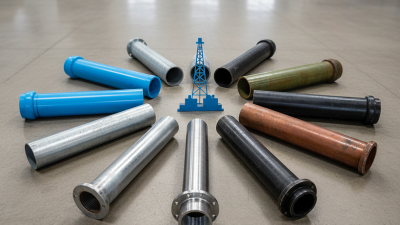
    Choosing the best well casing pipe in 2026 requires more than comparing steel grades or purchase prices. Global buyers must consider formation pressure, corrosion risk, installation depth, connection design, and regional supply conditions. A casing string that performs well in a shallow sandstone well may fail in a deep, high-temperature formation.

    Practical field experience shows that material selection begins with the well design. Carbon steel remains widely used for conventional wells, while corrosion-resistant alloys may suit environments containing hydrogen sulfide, carbon dioxide, or saline water. Premium connections can improve sealing performance, but they also increase inspection and handling requirements. Small details matter. Thread damage can delay an entire project.

    This guide compares common well casing pipe types, including their strengths, limitations, typical applications, and buying considerations. It also examines API 5CT compliance, traceability documents, dimensional accuracy, manufacturing quality, and supplier reliability. Buyers should verify certificates, test reports, and production records before approving a shipment. A low quotation may hide weak quality control or expensive field adjustments.

    There is no universal “best” pipe. That assumption can fail. Geological data may be incomplete, and operating conditions can change after drilling. Therefore, engineers should review pressure calculations, collapse resistance, tensile strength, and corrosion allowances with qualified specialists. The recommendations in this guide provide a practical starting point, not a substitute for project-specific engineering. Reliable decisions combine standards, tested evidence, supplier experience, and honest risk assessment.
    2026 Best Well Casing Pipe Types for Global Buyers

    What Well Casing Pipes Do: API 5CT Sizes from 4½ to 20 Inches

    2026 Best Well Casing Pipe Types for Global Buyers

    API 5CT well casing pipes protect the borehole and isolate underground formations. They also support cement and help control pressure during drilling and production. Common nominal sizes range from 4½ to 20 inches. Each size serves a different well section. Smaller casing often fits deeper production zones. Larger casing creates room for drilling tools, cement, and later strings.

    Size alone does not define casing performance. Buyers should check wall thickness, steel grade, connection design, drift diameter, and delivery condition. Collapse resistance matters when outside pressure rises. Burst strength matters when internal pressure increases. Tensile capacity matters while crews run long casing strings. These values must match the well design, not a convenient catalog line.

    Field conditions can change the decision. A 13⅜-inch string may suit a surface section, while 9⅝-inch casing may protect a production interval. A 20-inch pipe is not automatically safer or better. It may require larger equipment, more cement, and higher transport costs. Smaller pipes can restrict future tools. That trade-off is easy to underestimate.

    Check the actual API 5CT specification, inspection records, heat numbers, and dimensional reports. Confirm thread compatibility before shipment. A neat size chart can mislead. Temperature, fluids, deviation, and pressure cycles deserve equal attention. Even experienced teams occasionally select a technically compliant pipe that performs poorly in the complete well system. Careful review remains necessary.

    Casing Steel Grades Explained: J55, K55, N80, L80, P110 and Q125

    In 2026, well casing buyers need more than a high-strength label.

    The IEA Oil 2024 report projects global oil demand near 105.4 million barrels daily by 2030. This supports continued casing demand, but field conditions still control grade selection. API Specification 5CT and ISO 11960 define the main mechanical requirements.

    J55 and K55 suit many conventional, moderate-depth wells. Their minimum yield strength is about 379 MPa, while K55 requires higher minimum tensile strength.

    N80 raises minimum yield strength to approximately 552 MPa. It fits deeper or more demanding wells, but it is not automatically suitable for sour environments.

    L80 also starts near 552 MPa and offers controlled hardness, making it a common choice where sulfide stress cracking is a concern.

    P110 reaches about 758 MPa minimum yield strength. It supports high loads and challenging depths.

    Q125 begins near 862 MPa, yet its value depends heavily on connection design, collapse resistance, and qualified sour-service performance. Stronger is not always safer.

    Tips: Match grade, wall thickness, connection type, and temperature to the well design. Review mill certificates, heat numbers, and third-party inspection records. Check actual collapse calculations, not only yield strength. Ask for NACE-related qualification when sour gas may occur. A small specification mistake can become a costly field failure. حڪومت

    Connection Types Compared: API BTC, LTC, STC and Premium Threads

    For 2026 global buyers, casing connections deserve more attention than steel grade alone. API Spec 5CT defines casing requirements, while API RP 5C5 evaluates connection performance through laboratory testing. ISO 13679:2019 adds qualification guidance for critical applications. These standards do not make every thread equal.

    API Buttress Thread Casing (BTC) remains practical for conventional wells. Its simple profile supports efficient handling and competitive purchasing. Long Thread and Coupling (LTC) offers stronger engagement than short-thread designs, but it still needs careful makeup control. Short Thread and Coupling (STC) can suit lower-demand sections, though its shorter engagement leaves less tolerance for field mistakes. That weakness is easy to underestimate.

    Premium threads use metal-to-metal seals, special torque windows, and improved resistance to pressure and compression. They usually cost more, and field crews need calibrated tools and trained inspectors. The International Energy Agency’s Oil 2024 report expects global oil demand to reach about 105.4 million barrels per day by 2030, increasing pressure for reliable well construction. Yet premium is not automatically better. Buyers should compare test evidence, temperature limits, load envelopes, repair procedures, and local service capability. Some projects still over-specify connections. Others save money too aggressively. Both choices deserve another review.

    2026 Best Well Casing Pipe Types for Global Buyers – Connection Types Compared: API BTC, LTC, STC and Premium Threads
    Connection Type Standard Status Thread Form Sealing Mechanism Typical Load Capability Common Well Applications Main Advantages Key Limitations Buyer Evaluation Priority
    API STC
    (Short Thread and Coupling)
    API Standard
    Defined for standardized casing applications under applicable API casing and thread specifications.
    Short, rounded casing thread; commonly identified as an 8-round thread profile. Metal-to-metal thread engagement with thread compound; the connection is not generally treated as a gas-tight premium seal. Suitable for conventional axial loading when pipe grade, wall thickness, coupling design and installation are properly selected. Shallow to moderate-depth wells, surface or intermediate casing, and cost-sensitive conventional programs. Lower connection cost, broad global availability, simple inspection and familiar field makeup procedures. Short engagement length provides lower tensile efficiency than LTC; limited suitability for high-pressure gas sealing, severe bending or demanding thermal cycles. Confirm tensile, collapse and burst ratings for the exact size, weight and grade; verify that the well does not require premium gas-tight performance.
    API LTC
    (Long Thread and Coupling)
    API Standard
    Defined for standardized casing applications under applicable API casing and thread specifications.
    Long, rounded casing thread; commonly identified as an 8-round thread profile with greater engagement than STC. Thread compound and mechanical thread engagement; it is not normally selected as a dedicated premium gas-tight connection. Generally offers higher tensile capacity than STC of comparable size and weight because of its longer threaded engagement. Intermediate and production casing where additional tensile capacity is needed without moving to a premium connection. Higher tensile performance than STC, established API interchangeability and relatively straightforward field handling. Longer makeup length and higher running sensitivity than STC; sealing and structural performance remain below many premium designs in critical wells. Compare connection efficiency, coupling dimensions, makeup torque and clearance against the actual casing design and running plan.
    API BTC
    (Buttress Thread and Coupling)
    API Standard
    Defined for standardized casing applications under applicable API casing and thread specifications.
    Buttress-type thread with load flanks designed to transfer axial load efficiently; commonly associated with a 3-thread-per-inch profile. Mechanical load-flank engagement supported by thread compound; not normally classified as a premium gas-tight seal. High tensile efficiency among common API casing connections, subject to the specific pipe size, weight, grade and connection rating. Deep wells, production casing, high axial-load strings and applications requiring stronger standard API casing connections. Strong axial-load performance, widely available, familiar to international drilling contractors and generally more robust than STC or LTC for demanding loads. Makeup and thread-starting control are important; sealing performance is not equivalent to a qualified premium gas-tight connection. Check connection tensile strength, joint efficiency, torque limits, coupling OD, drift clearance and running-tool compatibility.
    Premium Thread Proprietary / Qualified Design
    Performance depends on the individual connection design, qualification data and applicable operator requirements.
    Specialized geometry may include optimized load flanks, refined thread profiles and controlled interference features. May use a dedicated metal-to-metal seal, seal ring, improved thread interference or a combined sealing system; design-specific. Can provide high tensile efficiency, enhanced compression capability and improved resistance to combined loads when properly qualified. High-pressure/high-temperature wells, gas wells, deviated or horizontal wells, thermal wells, critical production casing and challenging completion designs. Potentially superior gas sealing, improved resistance to compression, bending and torque, and better performance under cyclic loading. Higher purchase price, stricter running procedures, connection-specific accessories and possible dependence on approved repair or inspection services. Request independent qualification data, VME or combined-load envelopes, gas-sealing test results, makeup window, running limits and field-repair procedures.
    Technical note: Connection performance is not determined by thread name alone. Final selection must consider casing outside diameter, nominal weight, steel grade, wall thickness, design loads, internal pressure, external pressure, temperature, well deviation, installation torque and applicable API or project specifications. Premium-thread performance varies by design and should be verified from the connection manufacturer’s qualified data rather than assumed from the term “premium.”

    How to Match Casing to Depth, Pressure, Temperature and Corrosion

    2026 Best Well Casing Pipe Types for Global Buyers

    How to Match Casing to Depth, Pressure, Temperature and Corrosion

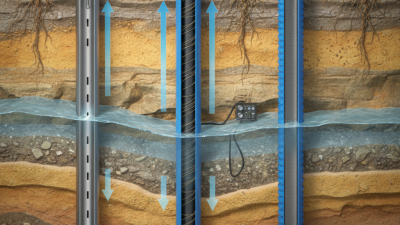
    Well casing selection starts with the well profile, not the pipe catalog. Conductor casing stabilizes shallow formations and supports early drilling operations. Surface casing protects freshwater zones and handles cementing loads. Intermediate casing controls unstable formations, pressure changes, or lost circulation. Production casing isolates the reservoir and supports long-term completion equipment. Liners can reduce steel usage, but their hanger and cement design require careful review.

    Depth increases axial tension and collapse risk. Deep sections need suitable wall thickness, connection strength, and verified collapse resistance. Burst pressure matters when formation pressure rises or well control conditions change. Temperature also affects steel strength, dimensional stability, and seal performance. A casing plan should use the actual pressure-temperature profile, including circulation and shut-in conditions. Small calculation errors can become expensive.

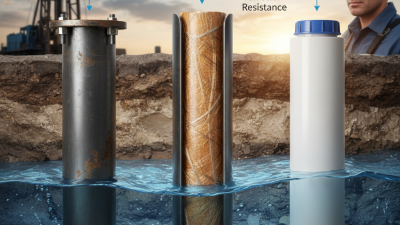
    Corrosion demands practical material selection. Carbon steel may work in mild environments, while carbon dioxide, chlorides, or hydrogen sulfide require stronger controls. Consider corrosion-resistant alloys, internal coatings, corrosion inhibitors, and strict fluid compatibility checks. Sour-service conditions need qualified materials and documented testing. Do not rely on nominal yield strength alone. Connection efficiency, cement quality, centralization, and inspection records can change real performance. A neat spreadsheet can still mislead. Field conditions are rarely perfect. Review assumptions with drilling, cementing, and completion engineers before purchasing, especially when temperature data remains incomplete.

    Global Buying Checklist: API 5CT Certification, ISO 11960 and Mill Data

    2026 Best Well Casing Pipe Types for Global Buyers

    Global casing selection begins with verified documents, not attractive pricing. The IEA Oil 2024 report projects oil demand at 105.4 million barrels per day by 2030. Reliable casing will remain essential for new and workover wells. API 5CT certification confirms defined requirements for casing grades, dimensions, testing, and marking. ISO 11960 provides the international framework for petroleum and natural gas well casing and tubing. Buyers should check the certificate scope, product grade, heat number, and inspection date. A certificate alone is not proof of a perfect pipe.

    Mill data deserves careful review. Request the mill test report for every heat and bundle. Check chemical composition, yield strength, tensile strength, elongation, hydrostatic testing, drift results, wall thickness, and thread inspection.

    Match each document to physical stencil markings. Independent inspection data can reveal mixed heats, incomplete records, or dimensional variation. In real purchasing work, document matching often takes longer than price comparison. That delay is useful.

    Tips:

    Ask for traceability from billet to finished pipe. Confirm whether testing follows API 5CT, ISO 11960, or both. Review non-destructive examination records and calibration dates. Do not accept scanned certificates with unclear heat numbers. I still recheck quantities against packing lists; small errors become expensive offshore. Avoid choosing casing by grade alone. Temperature, pressure, corrosion, connection design, and installation loads should guide the final selection.