
What Is the Best Type of Water Well Pipe?
Choosing the best water well pipe begins beneath the surface. Soil, water chemistry, depth, pressure, and local installation standards all influence the decision. A pipe that performs well in clean sand may fail in acidic water or fractured rock. The ground always has the final opinion.
Dr. Thomas M. Missimer, a respected groundwater scientist, offers a useful principle: “The right well design must fit the aquifer, not fight it.” This idea applies directly to pipe selection. PVC is lightweight, corrosion-resistant, and common in many residential wells. Steel provides strong structural support, especially in deeper or unstable formations. HDPE can offer flexibility and chemical resistance, but its suitability depends on temperature, pressure, fittings, and approved installation methods.
Look closely at the details. A casing joint must remain aligned. The screen should limit sand entry without restricting flow. Even a small gap can allow sediment to cloud a glass of water. Disinfection also matters after installation.
There is no universal winner.
In the field, installers often balance lifespan, cost, transport, and repair access. Some recommendations may sound convincing but ignore water chemistry or formation movement. That is where careful testing becomes essential. A professional should review laboratory water results, drilling records, pipe ratings, and applicable standards before choosing a water well pipe.
This guide compares the main pipe materials, their strengths, their weaknesses, and their practical applications. It also questions popular assumptions. The cheapest option may not remain inexpensive after corrosion, cracking, or sand production appears. Conversely, the strongest pipe may be unnecessary for a shallow, stable well.
What Makes a Water Well Pipe Suitable for Underground Use?
What Is the Best Type of Water Well Pipe?
What Makes a Water Well Pipe Suitable for Underground Use?
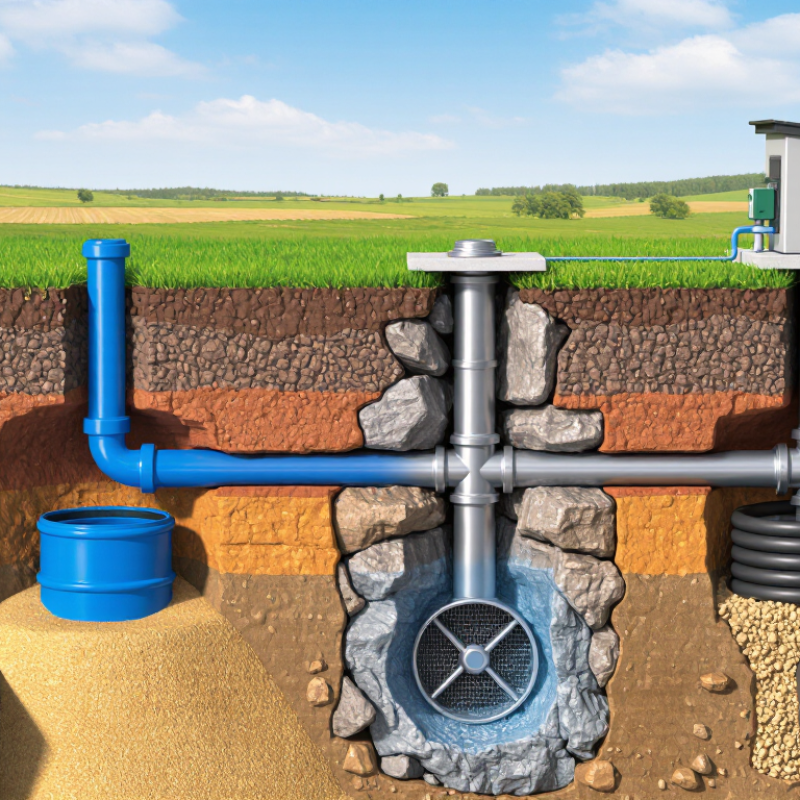
A suitable water well pipe must handle pressure, soil weight, moisture, and long-term contact with groundwater. In field inspections, I look beyond the pipe’s appearance. A thick wall does not automatically mean better performance. The pipe needs a pressure rating that matches the pump system and well depth.
Material selection depends on the site. Plastic pipe resists rust and is often easier to handle. Steel can provide strong structural support, especially in deeper or unstable formations. However, steel may corrode when soil chemistry and groundwater create aggressive conditions. The pipe should also be approved for potable water when it serves a household supply.
Connections deserve close attention. A strong pipe with poor joints can still leak or allow contamination into the well. Threaded, solvent-welded, or mechanical connections must match the pipe material and installation method. Seals should remain stable underground. Small gaps can become serious problems.
Burial depth, soil movement, freezing conditions, and gravel placement also affect service life. I have seen installations fail because installers focused only on pipe strength. That assumption needs reconsideration. The internal diameter must support the required flow without excessive friction. Wall thickness, temperature limits, and chemical resistance should be checked against local conditions. A qualified well professional can verify these details through site testing and applicable water-safety standards.
What Is the Best Type of Water Well Pipe? - What Makes a Water Well Pipe Suitable for Underground Use?
| Pipe Material | Common Underground Role | Corrosion Resistance | Strength and Load Performance | Flexibility and Handling | Typical Joining Method | Main Advantages | Important Limitations | Overall Suitability |
|---|---|---|---|---|---|---|---|---|
| PVC Pressure Pipe | Well casing and water-service or pump-drop pipe in many residential and light-commercial wells | Excellent resistance to rust and many naturally occurring groundwater chemicals | Good compressive performance when correctly selected, centered, and supported; less impact-resistant than steel | Lightweight and relatively easy to transport and install; rigid pipe requires careful alignment | Threaded joints or solvent-cemented joints, depending on the pipe standard and application | Low weight, smooth interior, good resistance to scaling, and generally lower installation effort | Can become brittle under impact or cold conditions; must be protected from excessive heat, sunlight, and unsuitable chemicals | Very suitable for many properly designed groundwater wells |
| High-Density Polyethylene (HDPE) | Flexible pump-drop pipe, water-service pipe, and selected casing or conduit applications | Excellent resistance to rust, electrochemical corrosion, and many groundwater contaminants | Good tensile and impact performance; long unsupported vertical drops require correct sizing and support | Highly flexible, lightweight, and available in long lengths with fewer joints | Heat-fusion or mechanical fittings approved for the intended service | Resists impact, tolerates ground movement well, and can reduce the number of underground connections | Expansion and contraction must be considered; temperature, pressure, wall thickness, and manufacturer limitations are important | Excellent for flexible drop-pipe installations and moving-ground conditions |
| Carbon Steel | Well casing, surface casing, and installations requiring high mechanical strength | Moderate to poor without suitable corrosion control; groundwater chemistry strongly affects service life | Very high mechanical strength and impact resistance; performs well where heavy external loads are expected | Heavy and less convenient to handle than plastic; requires lifting equipment for larger sections | Threaded, welded, or mechanically coupled joints, subject to local requirements | Strong, rigid, and well suited to difficult drilling conditions or formations with high mechanical demands | Can rust internally or externally; heavier installation and potential maintenance requirements | Highly suitable when strength is the primary requirement and corrosion is addressed |
| Stainless Steel | Specialized well casing, screens, or components exposed to corrosive groundwater | Very good to excellent, depending on the alloy and water chemistry | High strength with good resistance to many corrosive environments | Rigid and heavier than plastic; installation usually requires more specialized handling | Welding, threaded connections, or approved mechanical couplings | Strong and durable in many aggressive water conditions; suitable for demanding applications | Higher material and fabrication cost; alloy selection must match chloride, acidity, and other water conditions | Suitable for corrosive or specialized wells where its higher cost is justified |
| Galvanized Steel | Older water-service and well-pipe installations; less common for new deep-well systems | Initially better than bare carbon steel, but the zinc coating can eventually wear or corrode | Good rigidity and mechanical strength | Heavy and difficult to install compared with plastic alternatives | Threaded connections | Rigid and mechanically strong for some legacy installations | Internal corrosion and mineral buildup can reduce flow; not usually the first choice for new potable-water wells | Conditionally suitable, mainly for compatible existing systems or specific applications |
Key selection principle: The best water well pipe depends on whether the pipe is being used as casing, screen, or pump-drop pipe. A suitable underground pipe should have adequate pressure and collapse resistance, verified potable-water compatibility, resistance to the site’s groundwater chemistry, reliable joints, and a design appropriate for the well depth, temperature, soil movement, and installation method. Local well-construction codes and engineering requirements should always be checked before selection.
Related Posts
-
10 Best Well Pipe Suppliers for Global Buyers?
-
Top Well Pipe Manufacturers for Global Buyers
-
Understanding the Importance of Water Well Pipe Selection for Safe Water Access
-
How to Choose the Right Well Pipe for Your Water Supply Needs?
-
2026 Top Types of Well Caps for Global Buyers?
-
How to Choose the Right PVC Tubes for Your Project?