Top Well Pipe Manufacturers in China for Global Buyers
Choosing reliable well pipe manufacturers in China requires more than comparing prices or browsing polished factory websites. Global buyers must examine steel grades, pipe dimensions, connection designs, inspection records, and production consistency. A suitable supplier should explain how each well pipe performs under pressure, tension, corrosion, and changing temperatures. It should also provide traceable test reports and clear quality-control procedures.
As petroleum engineer George E. King has observed, “Good casing design begins with understanding the loads, not merely choosing steel.” This principle applies directly to supplier evaluation. A manufacturer may offer API 5CT products, but certification alone does not prove dependable field performance. Buyers should review mill certificates, hydrostatic testing, drift inspection, thread protection, and packing details. Small details matter. Damaged threads can delay an entire well project.
China has many capable manufacturers with advanced mills, automated inspection systems, and export experience. Yet quality can vary between factories, production lines, and even batches. That uncomfortable fact deserves attention. A low quotation may hide weaker traceability, inconsistent dimensions, or limited after-sales support. Buyers should request samples, factory evidence, independent inspections, and references from comparable projects.
This guide introduces leading Chinese well pipe manufacturers for global buyers. It considers manufacturing capacity, standards, product range, customization, delivery reliability, and communication. No supplier is perfect. The best choice depends on formation conditions, operating depth, project risk, and local requirements. Careful verification remains essential before signing any purchase agreement.
What Well Pipes Are and Why Chinese Manufacturers Serve Global Buyers
Well pipes are tubular components used to construct and protect water, geothermal, monitoring, and irrigation wells. Casing keeps surrounding soil from collapsing into the borehole. Screen sections allow water to enter while limiting sand movement. Riser pipes then carry water toward the surface. Their performance depends on diameter, wall thickness, slot design, connection type, and material choice.
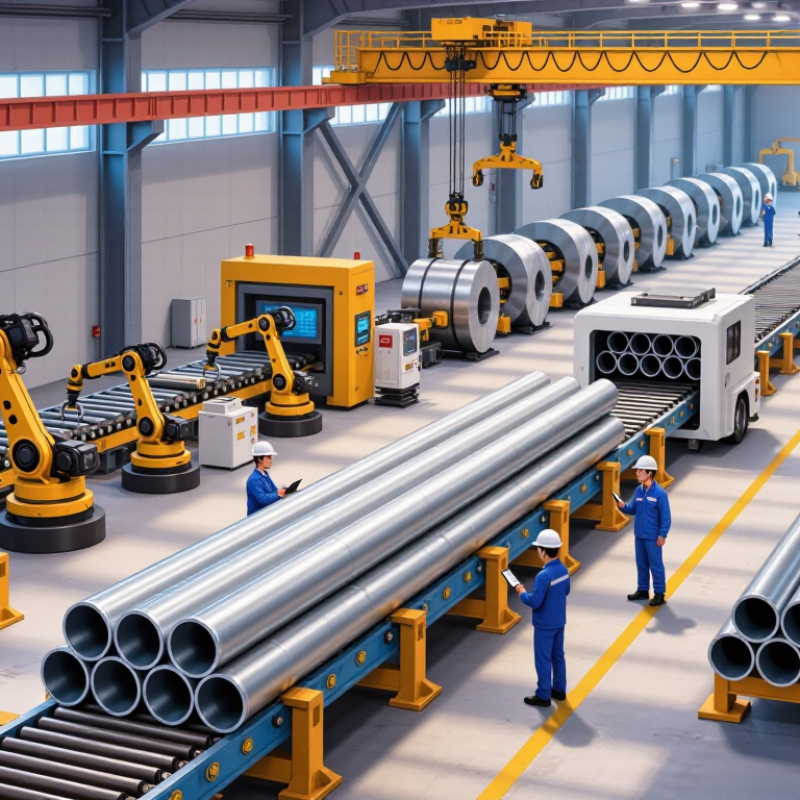
Chinese manufacturers serve global buyers because they combine large-scale production with flexible customization. Many facilities can process PVC, stainless steel, carbon steel, and other engineering materials. They commonly produce threaded ends, flanged connections, and screen openings matched to project drawings. A buyer may request a six-meter casing, a specific slot width, or packaging for long-distance sea transport. These details affect installation time and total project cost.
Reliable sourcing requires more than comparing quotations. Buyers should review material certificates, dimensional reports, pressure data, and sample inspection records. Factory audits and independent testing can reveal problems before shipment. In practice, specifications are sometimes misunderstood between engineering teams and factories. A drawing may show one tolerance, while a purchase order shows another. That mistake can delay drilling work. Fit matters. Clear drawings, approved samples, and written inspection points reduce that risk. Chinese suppliers can be strong partners, but price alone is not proof of quality. I would also question unusually low offers, especially when testing or protective packaging is missing.
Key Standards and Specifications for Selecting Well Pipe Suppliers
For global buyers, selecting a well pipe supplier requires more than comparing prices. Confirm whether the pipe follows API Spec 5CT or ISO 11960 requirements. These standards address dimensions, steel grades, heat treatment, and product testing. Ask for current certificates, not scanned documents with unclear dates.
Check the outside diameter, wall thickness, length range, drift diameter, and connection type. These details must match the drilling design and operating pressure. For sour or corrosive wells, verify material performance under the expected environment. Request hydrostatic test records, non-destructive examination results, and complete heat-number traceability. Thread protection also matters. Damaged threads can appear after long transport.
Supplier evaluation should include factory audits and sample inspections. Review calibration records for gauges and pressure equipment. Confirm whether the manufacturer controls steel sourcing, threading, coating, packing, and final inspection internally. A reliable supplier should explain rejection procedures without avoiding difficult questions. Communication quality is part of technical quality.
A common field-review lesson is simple: a catalog number is not enough. One shipment may meet the specification, while another shows inconsistent wall thickness. That possibility deserves attention. Buyers should define acceptance criteria in the purchase contract, including tolerances, documentation, marking, and remedies for nonconforming pipe. No checklist is perfect. Recheck assumptions before production begins.
Leading Well Pipe Manufacturers in China and Their Product Strengths
China’s well pipe manufacturers serve groundwater, irrigation, geothermal, and industrial projects worldwide. Their product strengths often include broad diameter ranges, steel or PVC options, and flexible production volumes. Many factories support casing, screen, and riser pipe production under one supply program. This can simplify procurement for international buyers.
Experienced manufacturers usually control key steps in-house. These may include pipe forming, slotting, threading, welding, and surface treatment. A reliable supplier should provide material certificates, dimensional reports, and pressure or leakage test records. For slotted screens, buyers should examine opening accuracy, slot distribution, and burr removal. Small defects can affect sand control and installation performance.
Customization is another practical advantage. Factories may adjust wall thickness, connection type, slot size, length, and coating requirements. Clear drawings matter. Vague specifications create avoidable delays. Buyers should also confirm applicable standards, inspection methods, packaging, and export documents before production. No factory is perfect. Even a capable manufacturer may need closer supervision during a complex order. Independent inspection can reveal issues that factory photos cannot show. Samples deserve careful testing, especially when the pipe will face acidic water, high pressure, or repeated installation stress.
How to Evaluate Quality, Certifications, Capacity, and Export Experience
When evaluating well pipe manufacturers in China, begin with quality evidence, not polished catalogs. API Specification 5CT and ISO 11960 define requirements for casing and tubing, including dimensions, mechanical properties, marking, and testing. Ask for current certificates and confirm their scope with the issuing body. A certificate without traceable heat numbers proves little. Request mill test certificates, chemical analysis, yield strength, tensile strength, hydrostatic results, drift records, and non-destructive testing reports. Inspect how each pipe is marked, bundled, and protected against corrosion. Small details matter.
Capacity needs physical proof. Compare stated monthly output with production lines, furnace access, inspection equipment, and recent delivery records. The World Steel Association’s World Steel in Figures 2024 reports global crude steel production near 1.9 billion tonnes, but large steel output does not automatically mean reliable well pipe quality. Ask for samples from different heats. Review rejection rates and corrective-action records. Few suppliers volunteer bad news. That is worth questioning.
Export experience should include destination history, packaging photographs, loading procedures, and references for comparable projects. Check whether the manufacturer understands inspection hold points, documentation, customs requirements, and agreed Incoterms. UN Comtrade trade data can help compare a supplier’s declared export activity with market patterns. The IEA’s World Energy Outlook 2024 indicates oil demand may peak around 2030 under stated policies. Long-term demand is uncertain. Therefore, buyers should test flexibility, spare capacity, and response times, not only today’s quotation. Mistakes happen. A transparent supplier explains them clearly.
Top Well Pipe Manufacturers in China for Global Buyers - How to Evaluate Quality, Certifications, Capacity, and Export Experience
| Evaluation Dimension | What Global Buyers Should Verify | Relevant Standard or Reference | Objective Evidence to Request | Recommended Screening Result |
|---|---|---|---|---|
| Product Scope | Confirm whether the factory produces oilfield casing, tubing, line pipe, or only trades finished products. Check size range, steel grades, connection types, and end finishes. | API Specification 5CT and ISO 11960 for casing and tubing; API Specification 5B for casing, tubing, and line-pipe thread specifications. | Current product catalogue, dimensional range, grade list, thread drawings, manufacturing-flow chart, and sample mill certificates. | Accept only suppliers whose documented product range matches the well design and purchase specification. |
| Material Quality | Evaluate chemical composition, yield strength, tensile strength, elongation, hardness, heat-treatment condition, and traceability from billet or pipe to finished product. | API 5CT grade requirements; ASTM E8/E8M for tensile testing; ASTM E18 for Rockwell hardness testing; ISO 6892-1 for metallic tensile testing. | Heat-number traceability, third-party or accredited laboratory test reports, heat-treatment records, and original material certificates. | Pass only when test results comply with the ordered grade and every production lot is traceable. |
| Dimensional Accuracy | Check outside diameter, wall thickness, length, straightness, ovality, drift diameter, end squareness, and coupling dimensions against the approved purchase specification. | API 5CT dimensional and inspection requirements; API 5B requirements for thread and gauge inspection. | Inspection and Test Plan, calibrated measuring-equipment records, dimensional inspection reports, drift records, and thread-gauge certificates. | Reject suppliers that provide only nominal dimensions without actual inspection records for the production lot. |
| Non-Destructive Testing | Verify the required inspection method for the pipe body, weld area where applicable, ends, and couplings. Confirm personnel qualification and equipment calibration. | API 5CT inspection provisions; ISO 9712 for qualification and certification of non-destructive testing personnel; ASTM E213 or ASTM E273 where applicable for ultrasonic examination. | NDT procedure, operator certificates, equipment calibration certificates, acceptance criteria, and signed NDT reports linked to heat or batch numbers. | Require complete NDT records and independent verification for critical or sour-service applications. |
| Thread and Connection Integrity | Assess thread profile, taper, pitch, stand-off, sealing surface, coupling fit, thread protectors, and make-up procedures. Premium connections require separate qualification evidence. | API 5B for standard thread inspection; ISO 13679 for casing and tubing connection evaluation; ISO 11960 for product requirements. | Thread inspection reports, calibrated working and reference gauges, connection drawings, make-up torque guidance, and qualification test documentation. | Approve only connections that are compatible with the buyer’s running tools, design loads, and well conditions. |
| Corrosion and Sour-Service Capability | Determine whether the material is suitable for hydrogen sulfide exposure, carbon dioxide service, high pressure, high temperature, or chloride-containing environments. | NACE MR0175/ISO 15156 for materials in H₂S-containing oil and gas production; ISO 15156 does not replace the purchaser’s complete corrosion assessment. | Material condition records, hardness results, sour-service qualification reports, corrosion test reports, and written service limitations. | Do not accept generic “sour-service” claims without grade-specific evidence and defined operating limits. |
| Quality Management and Certification | Check whether the quality-management system covers purchasing, production, inspection, nonconformity control, corrective action, document control, and product traceability. | ISO 9001 for quality-management systems; API Monogram licensing may be relevant when the product is supplied under the applicable API product specification. | Certificate scope, certificate number, issuing certification body, validity dates, latest audit status, and evidence that the certificate covers the actual manufacturing site. | Verify certificates directly with the issuing body or official certification database where available. |
| Production Capacity | Assess available production lines, annual capacity by product type, heat-treatment capability, thread-shop capacity, inspection capacity, storage space, and peak-season availability. | Capacity should be evaluated against the buyer’s required delivery schedule, lot size, specification, and inspection plan rather than by a generic annual figure. | Plant layout, equipment list, recent production schedule, capacity statement by size and grade, maintenance records, and evidence of subcontracted processes. | Use a pre-production capacity review for large orders and confirm bottlenecks such as heat treatment, threading, coating, or third-party inspection. |
| Inspection and Testing Resources | Confirm access to chemical analysis, tensile testing, hardness testing, hydrostatic testing, ultrasonic testing, magnetic-particle testing, dimensional inspection, and thread gauging as required. | Applicable API, ISO, ASTM, and purchaser specifications; laboratory competence can be assessed against ISO/IEC 17025. | Laboratory scope, calibration certificates, test-method list, sample reports, equipment serial numbers, and third-party inspection arrangements. | Give preference to suppliers with in-house control of critical tests and transparent third-party inspection access. |
| Export Experience | Evaluate experience with export documentation, Incoterms, packing for ocean transport, fumigation requirements, certificate legalization, customs documentation, and destination-country import rules. | Incoterms® 2020 for delivery responsibilities; destination-country customs and product-compliance rules must also be reviewed. | Redacted bills of lading, packing lists, commercial invoices, certificates of origin, export references, logistics procedures, and records of previous inspections. | Prefer documented experience with comparable pipe specifications, shipment sizes, destinations, and packaging requirements. |
| Packaging and Corrosion Protection | Review end protectors, coupling protection, separators, bundling, lifting points, moisture control, marking, and suitability for long-distance sea transport and outdoor storage. | Buyer-approved packing specification, applicable dangerous-goods or timber-packaging rules where relevant, and transport-condition requirements. | Packing drawings, photographs of completed export shipments, material specifications for protectors, marking samples, and loading plans. | Approve packaging only after confirming protection against impact, thread damage, contamination, moisture, and incorrect identification. |
| Documentation and Traceability | Ensure that each bundle, pipe, coupling, heat, test report, and shipping document can be matched throughout the supply chain. | API 5CT documentation and marking requirements; purchaser-specific document requirements should be included in the purchase order. | Manufacturing Record Book index, material certificates, inspection reports, release note, packing list, and traceability matrix. | Make document completeness and traceability a contractual acceptance condition. |
| Pre-Shipment Verification | Use independent inspection for quantity, dimensions, visual condition, markings, thread condition, certificates, packaging, and loading control before dispatch. | Inspection scope should follow the approved Inspection and Test Plan, purchase specification, and applicable API or ISO requirements. | Signed inspection release, photographic record, sampling plan, nonconformance report, corrective-action evidence, and final shipping authorization. | Use hold points for critical inspections and release payment or shipment only after required records are complete. |
Buyer note: Standards and certifications should be checked for the specific manufacturing site, product specification, grade, connection, and order lot. A certificate alone does not replace product testing, traceability, or independent inspection.
Steps for Comparing Quotes, Verifying Factories, and Placing Orders
When comparing well pipe quotes from Chinese suppliers, place every offer in one spreadsheet. Record outer diameter, wall thickness, steel grade, pipe length, thread type, coating, tolerance, and required testing. A cheaper quote may exclude coupling, inspection, export packing, or inland delivery. Ask each factory to state the Incoterm, minimum order quantity, production time, payment schedule, and quotation validity. Small wording differences can change the final cost.
Factory verification needs more than a polished website. Request the business license, production address, equipment list, recent inspection records, and relevant quality certificates. Confirm that the legal company name matches the bank account and contract. A live video tour can show cutting lines, threading machines, storage areas, and finished pipe markings. Independent inspectors should check dimensions, surface condition, thread accuracy, chemical composition, and pressure performance. Ask for heat numbers and material certificates that connect each bundle to its production record. Documents can be copied. Traceability matters more.
Before ordering, approve a written technical specification and a sample report. The purchase contract should define accepted tolerances, packaging, marking, inspection rights, delay remedies, and procedures for damaged goods. Use staged payments tied to production and pre-shipment inspection. Keep photographs of bundle labels and loading conditions. Confirm whether pipes need wooden supports, protective caps, or moisture control during transport. I would not rely on promises made only through chat. A rushed order can expose missing details, and even experienced buyers sometimes overlook thread protectors or port charges. That mistake is expensive.
Related Posts
-
How to Choose the Right Well Pipe for Your Water Supply Needs?
-
10 Best Well Pipe Suppliers for Global Buyers?
-
Top 10 Water Well Pipe Types for International Buyers?
-
2026 Best Water Well Pipe Options for Global Buyers
-

8 Essential Tips for Choosing Between Steel and PVC for Your Next Project
-
Top Pipe Supplies in China for Global Buyers Guide?